Showing posts with label Jane Hirshfield. Show all posts

September 13, 2023

Prompt: Broken Off

This month's model poem is the shortest we have ever used as a writing prompt example for our submissions. Not even 17 syllables, it is shorter than a haiku.

Two Linen Handkerchiefs
How can you have been dead twelve years
and these still
   by Jane Hirshfield

The poem asks the reader to complete the thought, as poems often do. No ellipsis, no dash, just broken off.

It was in listening to a short interview with the poet, that I discovered this poem and her explanation of how it came to be.

"The poem is broken off in exactly the way a life is broken off, in exactly the way grief breaks off, takes us beyond any possible capacity for words to speak. And yet it also, short as it is, holds all of our bewilderment in the face of death. How is it that these inanimate handkerchiefs — which did belong to my father and are still in a drawer of mine, and which I did accidentally come across — how can they still be so pristinely ironed and clean and existent when the person who chose them and used them and wore them is gone? ... Some poems have a way of, sometimes quite literally, looking out a window. They change their focus of direction, they change their attention. And by doing that, by glancing for a moment at something else, the field of the poem becomes larger."

Jane Hirshfield is a poet I have used multiple times for prompts and she is a poet I have heard read in person multiple times. She seems to be a very gentle and compassionate soul, and that is often clear in her poetry. She is an ordained lay practitioner of Zen. ("I'm [also] a Universal Life minister, but that was just so I could marry some friends," she says, laughing.)

I think compassion, in a way, is one of the most important things poems do for me, and I trust do for other people. They allow us to feel how shared our fates are. If a person reads this poem when they're inside their own most immediate loss, they immediately — I hope — feel themselves accompanied. Someone else has been here. Someone else has felt what I felt. And, you know, we know this in our minds, but that's very different from being accompanied by the words of a poem, which are not ideas but are experiences."

I don't know if all that can be contained in her two-line poem. And we don't expect you to submit poems that are only two lines. 

Our call for submissions for the October issue is for poems about things "broken off." Your poem might be about a relationship broken off. Maybe your poem will literally break off at some appropriate point, as Jane's poem does. Maybe it is about an actual object that has a part broken off, or more figuratively, a person with something broken off. What do those two words mean to you?

Submission Deadline: September 30, 2023


Follow this blog for all things poetry.
To see our past prompts and more than 300 issues,
visit our website at poetsonline.org

March 7, 2020

Prompt: Lost (and Perhaps Found)

Jane Hirshfield has a new book of poems out this month titled Ledger (from Alfred A. Knopf). I saw one of the poems on The Writer's Almanac - "Advice to Myself" - and I immediately identified the idea of a computer file that comes up blank.

Her poem begins:

The computer file
of which
I have no recollection
is labeled “advice to myself”

I click it open
look
scroll further down

the screen
stays backlit and empty

thus I meet myself again
hopeful and useless...


Not only have I come across computer files that are empty or just don't make any sense to me currently, but I also have more than a few "poems" that I started in a document and when I looked back at them weeks or months later my reaction is "Where was I going with this?"

Perhaps this is just a sign of aging, along with the other lost things unpoetic - phone numbers, people's names, books read and movies seen and lots of events.

All of those seem trivial compared with the things we lose and don't find.

Carl Sandburg was "Lost" quite literally "Desolate and lone / All night long on the lake."

When Stephen Dobyns was "Lost," he asked, "Where had wrong turns been made?"

For Ellen Bass, it's a "Lost Dog." 

But for Lucille Clifton, it is a very serious "the lost baby poem."

Lucyna Prostko claims that "Nothing Is Lost."

I believe that most of us hope that when something is lost, it will eventually be found. Ron Padgett wrote a poem that said that "Man has lost his gods" but later wrote in "Lost and Found" and wondered "What did I mean?"

John Milton thought that it was paradise that was lost, but then he wrote Paradise Regained.

But back to Jane's poem that started this prompt. What appealed to me in that short poem was the idea that things lost are often not found.

For your writing this month, we are looking for poems about things lost - and are perhaps found or perhaps not.

Submission Deadline: March 31, 2020


Visit our website at poetsonline.org

February 15, 2019

Love and the Ink Dark Moon

Izumi Shikibu, a poet at Empress Teishi's court.
(Shown here in a c. 1765 Kusazōshi by Komatsuken)


When my desire
grows too fierce
I wear my bed clothes
inside out,
dark as the night's rough husk
    - Ono no Komachi


I was gifted with a copy of The Ink Dark Moon: Love Poems by Ono no Komachi and Izumi Shikibu which are translated by Jane Hirshfield and Mariko Aratani. Besides the poems, I found the story of these poets from over a millennium ago very interesting. It seems that in Japan's imperial Heian Court, female poets were well accepted. I would have assumed the opposite. They were given a voice and could have a place in literary circles.

In this particular time and culture, the arts were valued and women had a place. No other period in Japan’s literary history was as dominated by women as the Heian Period. Hirshfield writes that this court setting "proved to be a uniquely auspicious environment for women writers for several reasons, but foremost is the central role of the arts in the conduct of daily life."

This collection is subtitled as "love poems" and there are certainly many that concern matters of the heart, but there are also poems about the passage of time and other themes.


This body
grown fragile, floating,
a reed cut from its roots...
If a stream would ask me
to follow, I'd go, I think.

    - Ono no Komachi


Ono no Komachi and Izumi Shikibu were important poets during Japan's Heian Age (795-1185). Their poems were generally waka (tanka) poems in form. Hirshfield says that "Komachi and Shikibu stand out as two of the greatest poets in an age of greatness not simply because they achieved technical virtuosity in their chosen form, the thirty-one syllable tanka verse, but because they used this form as a medium of reflection and introspection... each confronted her experience with a directness and honesty unusual in any age."

Izumi Shikibu was religious but also passionate - two qualities that are not always equally present. She did spend time in Buddhist monasteries and once contemplated becoming a nun. But she never denied her femininity, and her extramarital affairs made her the subject of ostracism by her family. While married, she fell in love with the Empress' son. After the death of the Prince she had an affair with the Prince's married brother.

the scandal caused the Prince's wife to leave him and Shikibu lived with him for five years. The Prince died during and during a period of intense mourning, she wrote more than 200 poems to her departed lover.

Remembering you...
The fireflies of this marsh
seem like sparks
that rise
from my body's longing.

    - Izumi Shikibu


Ono no Komachi as an old woman, a woodcut by Tsukioka Yoshitoshi
A life in vain.
My looks, talents faded
like these cherry blossoms
paling in the endless rains
that I gaze out upon, alone
    - Ono no Komachi

Jane Hirshfield is a well known poet with many connections to Japanese forms and philosophy. With the help of Mariko Aratani, she translated into the English language these poems, many of which were not available in English.

If you are interested in the tanka genre, women poets, or this period  and gives us new insight into life as lived during the Heian Era, considered by many scholars as a golden age for Japanese poetry and literature.

If you have ever read classical Japanese literature by women, you probably are more likely to know Sei Shonagon's The Pillow Book or Murasaki Shikibu's The Tale of Genji than these poets. (Shikibu is a title, not a name, so the two writers are not related except both were  part of the court of Empress Akiko. Komachi wrote 100 years earlier.)

All of these works deal with the Heian Period life and the sexual intrigue that was well known but usually happening under covers of silk and darkness. Court poets wrote about  almost anything happening around them from an affair, rain and snow storms, aging, or returning a fan. The poems are devoid of the politics of courtly life.

In this world
love has no color — 
yet how deeply
my body
is stained by yours.

Besides the poems, the book has a fascinating introduction and information about the process of translation. The latter topic has interested me of late, as I may take on some translation myself.

Hirshfield writes about that process:
"Anyone who attempts that impossible task, the translation of poetry, must at some point wonder what exactly a poem might be, if not its own body of words. For surely, all can attest who have made the hard and joyous effort to write a poem of their own, poetry dwells in words: absolutely particular in meaning, irreplaceably individual in rhythm and sound... the act of translation constitutes a leap of faith, a belief that somehow this part of a poem that lives both through words and beyond words can be kept alive, can move from its life in one verbal body to another."

Look at their translation of one poem by Komachi, and then compare it to another translation.

I know it must be this way
in the waking world,
but how cruel ---
even in my dreams
we hide from others' eyes

Another translation of that poem by Edwin Cranston, a translator who makes no claim to being a poet himself, renders that poem in this way.

In the waking world
Such caution may be well advised,
But even in dreams
To see him watching others' eyes ---
This is wretchedness itself!

Which translation is "correct?" Or is no translation really correct? As a poet, I prefer the Hirshfield version which is probably less literal. But there have always been those purists who would claim that literature should only be read in its original language. Of course, that takes a great deal of literature away from us.

This pine tree by the rock
must have its memories too:
after a thousand years,
see how its branches
lean towards the ground
     - Izumi Shikibu


No way to see him
on this moonless night ---
I lie awake longing, burning,
breasts racing fire,
heart in flames.

    - Ono no Komachi


November 1, 2015

Prompt: The Ode and the Body

For National Poetry Month last year, poets who serve on the Academy of American Poets Board of Chancellors participated in Poet-to-Poet, a multimedia educational project. Through videos, they invited young people in grades three to twelve to write poems in response to those shared by the poets.  Here is one of those poems.


"My Skeleton" by Jane Hirshfield

After reading the poem, Jane talks in the video about the poem and tells us it is an ode. “Ode” is from the Greek aeidein, meaning to sing or chant. It is an old form of lyric poetry which would have originally been accompanied by music and dance.

The Romantic poets used it as a way to formally address an event, a person, or a thing not present.
There are three typical types of odes: the Pindaric, Horatian, and Irregular. You can check into the more formal aspects of each, but we're being more general in our approach this month.

William Wordsworth's poem “Ode on Intimations of Immortality from Recollections of Early Childhood” is an example of an English language Pindaric ode.

The Horatian ode (named for the Roman poet Horace) is more contemplative, less formal, less ceremonious, and less theatrical. Look at the Allen Tate poem “Ode to the Confederate Dead.
 
The Irregular ode is just that. “Ode on a Grecian Urn” by John Keats was actually written based on his experiments with the sonnet.

Others: Shelley’s “Ode to the West Wind," Robert Creeley’s “America," Bernadette Mayer’s “Ode on Periods," and Robert Lowell’s “Quaker Graveyard in Nantucket.”

For this month, we ask you to write an ode that focuses on the body. Jane Hirshfield's poem opens with her direct address to the skeleton.

My skeleton,
you who once ached
with your own growing larger
She follows chronologically, following the skeleton as it ages.
each year
imperceptibly smaller,
lighter,
absorbed by your own
concentration.
Generally, the aging of the body is not a kind thing.
Angular wristbone's arthritis,
cracked harp of ribcage
And finally, she concludes with this beautiful image of its life work.
You who held me all my life
inside your hands
as a new mother holds
her own unblanketed child,
not thinking at all.
Our November prompt is an ode about a part of the body.  I suppose the skeleton is a part of the body, although it is made up of many smaller parts. That is true of the ear, the hand and the brain, so you might want to choose a specific part. You might choose the nose, a breast, the mouth, lips, tongue or a thumb. So many options. You don't need to get down to an anatomical level (although that might be interesting) and you could easily be like those Romantic poets in your approach.

One ode I heard read aloud by the poet several times is "Homage to My Hips" by Lucille Clifton. It is a short poem that probably would not count as an ode by Horatio's standards, but I'm fine with it as an ode.

Homage To My Hips

these hips are big hips.
they need space to
move around in.
they don't fit into little
petty places. these hips
are free hips.
they don't like to be held back.
these hips have never been enslaved,
they go where they want to go
they do what they want to do.
these hips are mighty hips.
these hips are magic hips.
i have known them
to put a spell on a man and
spin him like a top


July 8, 2009

Jane Hirshfield: Transformation

In descriptions of Jane Hirshfield and her poetry, you are likely to hear mentioned mindfulness about our world, plants, animals, the heart and the mind. She is a student of Zen and that influence sits quietly under many of her poems. Since she does not make it a public part of her poetry, I will not use it as part of our prompt.
"For quite a few years I didn't allow the practice part of my life to become known -- not because it isn't important to me but because it is private. Not everything belongs in the public realm. In any case I'm not an overtly Buddhist poet in the way that, for example, Allen Ginsberg was. But when I wrote the author's biographical note for Women in Praise of the Sacred, I felt I should disclose my own interest and background in the realm of spiritual experience. That information doesn't appear in any of the poetry-book biographies, though, because it doesn't belong there; knowing it may add something, but it's not the governing fact for a reader of my work." from The Atlantic
If you have been able to see and hear her read, you know of her gentleness. If not, take a look at the video below of her reading. In the poem I chose for this month's prompt, "This Was Once A Love Poem," I think many readers will (as I did) naturally begin to substitute as they read a person (probably "she" or "I") in place of the "poem" speaking within the poem. It surprised me to find that poem on the Academy of American Poets website as part of a group titled "Poems for Breakups and Divorce."  I had not really read the poem as being about a breakup, though I can see how it might fit into that group. I read the poem as one about transformation, particularly through growing older. 

In another poem, she says:
Without transformation,
yours the role of the chorus, to whom nothing happens.
The living step forward: choosing to enter, to lose.
Perhaps the poem might actually have been a love poem in an earlier draft. Perhaps it was transformed as the person was transformed. Our prompt for July steals directly from Hirshfield's opening. Write a poem that uses as its title or first line a variation on "This was once a love poem." You can maintain the idea of the changed poem ("This was once a sonnet to my wife...") or directly insert the person ("I/she/he was once a...") into the line. It should be about change and the recognition of what once was, and what now is. It could be a poem that would fit nicely onto that "Breakups and Divorce" page. Or it could go ars poetica and be a poem about itself and how the poem has changed. I like that in Hirshfield's verse "the poem" once had "no fold of skin softened" and "no pad of yellow fat." I wish the poem fought a bit harder to resist the changes, but it gently accepts no longer being a love poem. For submission information, go to PoetsOnline.org


Jane Hirshfield reads "Vinegar and Oil," "Vilnius," "A Cedary Fragrance," "A Day Is Vast" and "The Bell Zygmunt" at the 2008 Dodge Poetry Festival.


“A Cedary Fragrance” appears in Given Sugar, Given Salt. “A Day Is Vast” and “Oil and Vinegar” will appear in her next collection.

June 24, 2008

Poetry at the Library of Congress

Most people probably think of the Library of Congress as, well, a library. Fans of poetry may also think of the Library of Congress as the home of our Poet Laureate.

Connected to that is a good number of other poetry-related events and resources that you can browse at Poetry at the Library of Congress.

One of those resources is the "Poet and the Poem" webcasts. This is an ongoing series of live poetry interviews (they run just under an hour in length) at the Library of Congress with distinguished artists that are available as webcasts online. The poets talk with host Grace Cavalieri about their craft and sources of inspiration.

Some of the poets featured include:
Another program is "Poet Vision" that features poets reading and talking about their work in video that was originally filmed and broadcast in Philadelphia from 1988-90. The 12 episodes capture for posterity insights from and about Lucille Clifton, Rita Dove, Allen Ginsberg, Louise Glück, Sam Hamill, Michael Harper, Stanley Kunitz, Denise Levertov, and Robert Penn Warren. The original tapes were donated to the Library of Congress in 2000 by producers Rohm and Haas and are kept in the Library’s Motion Picture, Broadcasting and Recorded Sound Division. View all webcasts in the Poet Vision series

December 9, 2005

Prompt: Being in the Moment

This month's prompt is to write of an occasion when you were "in the moment" completely. We often hear of this from musicians, artists, athletes - but it occurs often enough for all of us, if only for that moment, in our everyday lives.

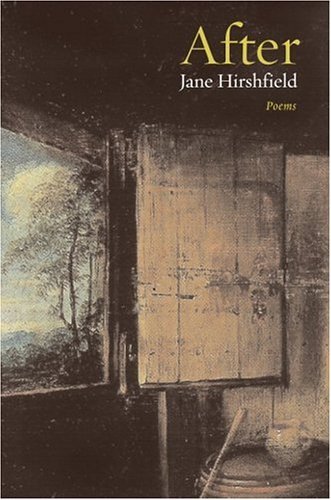
In his always interesting "American Life in Poetry" column, Ted Kooser talks about our model poem, "The Woodpecker Keeps Returning" by Jane Hirshfield (After - Harper Collins, 2006).

His words: "the speaker discovers that through paying attention to an event she has become part of it, has indeed become inseparable from the event and its implications. This is more than an act of empathy. It speaks, in my reading of it, to the perception of an order into which all creatures and events are fitted, and are essential."

Hirshfield gives workshops in this - "Poetry as the Practice of Attention" If you want to read a bit more about Jane, try http://blogs.csmonitor.com/the_poetic_life/2005/05/ or to read a few other poems by her, go to http://www.poets.org/poet.php/prmPID/563

There is a term "zanshin," which means “the remaining mind” and also “the mind with no remainder.” I think this is related to our prompt, too. This is the mind of complete action - the moment in Zen archery after you release the arrow, in painting after the brush stroke when hand and brush lift, that moment after you release the ball... it's complete follow-through.

There's a book by Brenda Ueland, If You Want to Write, that talks about being "in the moment" (but not being lost in it) to maximize creativity - to be fully present in an intuitive activity, not an intellectual one. Ueland compares this kind of creativity and connection to playing a musical instrument - sometimes you play at it and sometimes you play in it. Great musicians play in it (even if not always technically perfect). Perfection of technique may not be obtainable, but a kind of "perfect" connection can exist between the reader and poet.

It's interesting it was originally published in 1938 because it sounds contemporary. here are a few bits from it.
"Everyone is talented, original, and has something important to say."
"The imagination needs moodling--long, inefficient, happy idling, dawdling and puttering."
"Think of telling a story, not of writing it."
"When you revise, do not try to think of better words, more gripping words. The problem is that it is not yet deeply enough imagined."
There's one chapter called "Why Women Who Do Too Much Housework Should Neglect It for Their Writing."

Of course, Zen is often used very loosely (or incorrectly) as a way of describing other practices, like being in the zone in golf, tennis or yoga. Better to stay with the literary - read "On Poetry and the Reallocation of Concentration: Learning to Forget" by Beth Ann Fennelly, who asks, " What exactly is happening in our brains when we cease to become conscious of time? "


Jane Hirshfield was born in New York City in 1953. She graduated from Princeton University in 1973. Hirshfield has been a lecturer in creative writing at the University of San Francisco and a visiting professor at the University of California, Berkeley. She serves as a member of the faculty of numerous writers conferences and in-school programs, including California Poets in the Schools, 1979-85, and the Port Townsend and Napa Valley Writers Conferences.
Her books of poetry include The October Palace , Of Gravity & Angels and The Lives of the Heart. Nine Gates: Entering the Mind of Poetry is her excellent book of essays on reading poetry, writing and her approach to life.