Showing posts with label Donald Hall. Show all posts

June 26, 2018

Donald Hall


Donald Hall, a former poet laureate of the United States, died on June 23, 2018. He was 89 and had lived much of his life at the old farm called Eagle Pond, his family’s ancestral homestead, in Wilmot, New hampshire.

He had been diagnosed with cancer in 1989 and beat his own odds of survival.

He began writing at age 12, and over his career wrote more than 40 books, with half of them being poetry.

He wrote often about apples, ox carts and the ordinary folk of his rural New England, along with using his childhood, baseball, and his time with and the death of his second wife, poet Jane Kenyon.

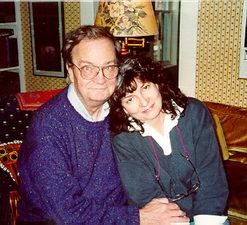
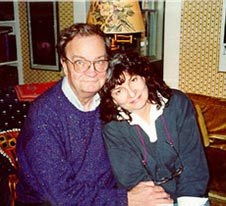
Donald & Jane
I heard him read his poetry along with Jane at one of the Dodge Poetry Festivals at Waterloo Village in New Jersey. They read together in the small church and talked about their shared life in poetry.

Hall was married to Jane Kenyon for 23 years. She died in 1995. He wrote about her and their marriage in the collections Without (1998) and The Painted Bed (2002).


I recorded Donald Hall when he read and talked about two of his poems. "Old Roses"
& "Weeds and Peonies", at a teachers' conference in Boston (2009) along with Robert Bly.

After Jane's passing, Hall with his wild hair and beard might have been taken on the streets to be a homeless man or an eccentric professor. But he was still the poet, changed by his life experiences, but still believing that "Poetry offers works of art that are beautiful, like paintings, but there are also works of art that embody emotion and that are kind of school for feeling."

AFFIRMATION

To grow old is to lose everything.
Aging, everybody knows it.
Even when we are young,
we glimpse it sometimes, and nod our heads
when a grandfather dies.
Then we row for years on the midsummer
pond, ignorant and content. But a marriage,
that began without harm, scatters
into debris on the shore,
and a friend from school drops
cold on a rocky strand.
If a new love carries us
past middle age, our wife will die
at her strongest and most beautiful.
New women come and go. All go.
The pretty lover who announces
that she is temporary
is temporary. The bold woman,
middle-aged against our old age,
sinks under an anxiety she cannot withstand.
Another friend of decades estranges himself
in words that pollute thirty years.
Let us stifle under mud at the pond's edge
and affirm that it is fitting
and delicious to lose everything.

      Donald Hall


MORE
poetryfoundation.org/poets/donald-hall

poetryfoundation.org/poets/donald-hall


theparisreview.org/interviews/2163/donald-hall-the-art-of-poetry-no-43-donald-hall


September 15, 2017

The Poetry of Death

Donald Hall and Jane Kenyon

When death, as public as a President or as private as a lover, overwhelms us, it speaks itself in elegy’s necropoetics.


I recently read Donald Hall's article in The New Yorker, "The Poetry of Death." It sounds like a real downer, but I recommend that you give it a read.

Many readers of this blog probably know that Donald Hall was married to Jane Kenyon and that they shared a life of poetry.

Jane Kenyon and I almost avoided marriage because her widowhood would have been so long, between us was there such a radical difference in age. And yet today it is twenty-two years since she died, of leukemia, at forty-seven—and I approach ninety...

I heard the two of them talk about their shared life in poetry in a session at a Dodge Poetry Festival a few decades ago. That was before Jane was diagnosed with leukemia.


We inhabited not the natural world but the landscape of leukemia. I read a draft of “Without” to Jane. From her bed, Jane said, “You’ve got it, you’ve got it!” A year later, I put the poem into the past tense, and eventually it became the title of my book of Jane’s death.
But poets know that death plays a big role if poetry. It is aprt of poetry history and all poets eventually deal with the topic in their poems.

Poetry begins with elegy, in extremity, as Gilgamesh laments the death of his companion Enkidu, watching worms crawl out of Enkidu’s neck. Homer sings of heroes as they die in battle, and Priam weeps to see the body of his son Hector dragged around the walls of Troy. Virgil follows Aeneas from the graveyard of Troy to the founding of Rome, Dido’s pyre flaming on the way. In the fifteenth century, poetry emigrated from Chaucer’s England north to the Scots, where William Dunbar wrote his elegy for the makers—in Greek, a poet is a “maker”—and grieved over twenty-five dead and dying Scots poets.


December 10, 2012

Books For The Giving Season

NPR's Alan Cheuse's seasonal book list made from "piling up books on my reading table, books I've culled from the offerings of the past few months, which because of their essential lyric beauty and power stand as special gifts for you and yours" includes a book of poems and a book for the season by a poet.


The Hungry Ear: Poems of Food and Drink by Kevin Young


Here is gustatory poetry for all seasons, from summer berry-picking to autumn harvests, winter holiday meals to maple syrup springs; poems about breakfasts, lunches, dinners and snacks; about meat and drink, soups and salads, desserts and snacks, coffee and Coca-Cola. The joy in these poems knows no bounds. Who knew that so many wonderful poets, from Li Po to Yeats to Mary Oliver and Gerald Stern, wrote so many wonderful words about satisfying this particular appetite? The taste of milk, the taste of apples, the taste of wine, bread, cheese, the company of loved ones, the presence of friends, all here, tripping off the tongues of some of the country's, and world's, most gifted poets.

Here's the opening of one poem - Joy Harjo's "Perhaps the World Ends Here"

The world begins at a kitchen table. No matter what, we must eat to live.

The gifts of earth are brought and prepared, set on the table. So it has been since creation, and it will go on ...

At this table we sing with joy, with sorrow. We pray of suffering and remorse. We give thanks.

Perhaps the world will end at the kitchen table, while we are laughing and crying, eating of the last sweet bite.


Christmas at Eagle Pond by Donald Hall (Author), Mary Azarian (Illustrator)


At the top of the stack on my book table rests a slender volume, a 70-page novella, Christmas at Eagle Pond, by former Poet Laureate Donald Hall. In this straightforward piece of narrative nostalgia, Hall conjures up a story of what it would have been like if he had visited his grandparents' New Hampshire farmhouse for Christmas in 1940. In doing so, he has made one of the most engaging Christmas narratives in a long line of these by U.S. writers, a story filled with the brisk December cold, horse-drawn carts and trains, recitations at the local meeting house, and as Hall gives us, a bountiful description of the holiday meal:

"Called to the table, we found it covered with food from end to end: chicken and stuffing, vegetables, mashed potatoes, gravy, butter, vinegar in a cruet. Uncle Luther presided at the far end of the table, Gramp sat at the near end by the plate stacked with chicken ... First thing, Luther closed his eyes and said grace, 'Dear Lord, we thank Thee.' "

July 22, 2008

Open Door Poetry

Borders Books has a portion of their website devoted to Open Door Poetry. It's a project to move poetry off the page and into video and audio. The site includes Billy Collins, Paul Muldoon, Kim Addonizio, Donald Hall, Franz Wright, Jorie Graham and others reading their poems and talking about poetry

They also are sponsoring the BORDERS Open-Door Poetry Contest which will be judged by Billy Collins, former U.S. Poet Laureate.

The second Borders Open-Door Poetry Contest is open for submissions through July. The top 10 (5 adult, 5 student) poems submitted, in text or in video, will be published on their site alongside a poem by Billy Collins in an upcoming episode. Billy will also read and give feedback on the poems he selects as best. All finalists’ poems will be considered for publication in our annual “Best of” book, which will highlight the many talented poets in the Borders community.

For full information and a submission form, go to bordersmedia.com/odp/

June 24, 2008

Poetry at the Library of Congress

Most people probably think of the Library of Congress as, well, a library. Fans of poetry may also think of the Library of Congress as the home of our Poet Laureate.

Connected to that is a good number of other poetry-related events and resources that you can browse at Poetry at the Library of Congress.

One of those resources is the "Poet and the Poem" webcasts. This is an ongoing series of live poetry interviews (they run just under an hour in length) at the Library of Congress with distinguished artists that are available as webcasts online. The poets talk with host Grace Cavalieri about their craft and sources of inspiration.

Some of the poets featured include:
Another program is "Poet Vision" that features poets reading and talking about their work in video that was originally filmed and broadcast in Philadelphia from 1988-90. The 12 episodes capture for posterity insights from and about Lucille Clifton, Rita Dove, Allen Ginsberg, Louise Glück, Sam Hamill, Michael Harper, Stanley Kunitz, Denise Levertov, and Robert Penn Warren. The original tapes were donated to the Library of Congress in 2000 by producers Rohm and Haas and are kept in the Library’s Motion Picture, Broadcasting and Recorded Sound Division. View all webcasts in the Poet Vision series

June 25, 2006

Donald Hall and the Position of Poet Laureate

I spent some time reading articles about Donald Hall being appointed the 14th Poet Laureate of the United States.

ON DONALD HALL:

"I think Don's a natural choice for our new laureate. He's been part of the poetic conversation ... for 50 years. He's a poet who's deeply rooted in a place, as fewer Americans are now, and also one even more rooted in the history of the language, in a lifelong love of musical speech." - Mark Doty

He is the third poet laureate from New Hampshire. (Robert Frost and Maxine Kumin are the others)

He is 77 and still has a reputation for outspokenness, particularly on 1st Amendment issues, so there's hope that this resident of the "Live Free or Die" state may stir things up.

He lives at Eagle Pond, in a New Hampshire farmhouse built by his great-grandfather in 1865 with his two cats, Thelma and Louise.

Eagle Pond was built by Hall's great-grandfather in 1865 and it's been in the family ever since. This places figures in much of his poetry. He says he remembers his grandfather telling stories here and reciting poems and summers haying in the morning and reading in the afternoon. He wrote his first poems about this house when he was 12.

He said that at 12 he wrote his first poem and it began: "have you ever thought about the nearness of death to you?"

Former Poet Laureate Billy Collins, called Hall a poet of "elegiac preoccupations," for whom "death is a favorite lens."

At 16, he was a fellow at the Bread Loaf Writers' Conference in Vermont.

Got his bachelor's degree in literature from Harvard in 1951. Dated poet Adrienne Rich there and knew Robert Bly (still a close friiend), Frank O'Hara, John Ashbery and Kenneth Koch.

At 29, he went to teach at the University of Michigan, where he remained until 1975.

There he met Jane Kenyon, then 19 and a student of his.

They married in 1972. Jane persuaded Hall to stop teaching, move back to Eagle Pond and support himself by writing. The prospect of no regular income terrified him, but they did it.

Hall and Kenyon together attracted almost as much attention as their poetry. Bill Moyers made an Emmy-winning documentary about the couple called "A Life Together."

Hall was appointed poet laureate of New Hampshire from 1984 - 1989.

In 1989, he learned he had colon cancer which metastasized to his liver. After chemotherapy, he went into remission, but was told he had a 1 in 3 chance of living three years.

In 1994, Kenyon was diagnosed with leukemia. Fifteen months later, at 47, she died.

Their life together, their love and her dying has been the subject of much of his writing since.

"I really got going as an elegiac poet when Jane died. It was the only thing that gave me comfort. I spent about 22 hours yelling and screaming and then I sat down to write. I was happy when I was writing to her. After a year it became impossible to say 'you,' while addressing her. I would like to write her many letters. There's so much she doesn't know."

He enjoys watching baseball on his satellite dish and like many from that area of the nation is a Red Sox fan.

These days, Hall wakes early, often by 4:30 a.m., and puts in several hours of writing, editing, revising ("the first drafts are always hideous") and dictating letters before taking a midday nap. He will assume his duties as poet laureate Oct. 1, but is not entirely sure how that will change his routine. "I will," he said, "administer prizes and fellowships and oversee a reading series at the Library of Congress." He will travel to Washington every six weeks and would like to start a poetry channel on satellite radio.

He has 15 poetry collections, several children's books, and essays on poets and their work. His latest poetry collection is White Apples and the Taste of Stone (Harcourt).


ABOUT THE POET LAUREATE POSITION

  • Established by President Franklin D. Roosevelt in 1937.
  • Usually held for one year but can be extended to as many as three.
  • Hall succeeds Ted Kooser, from Nebraska, who held the post since 2004.
  • It "pays" $40,000 a year ($35,000 for expenses and $5,000 for travel) The money is not paid by your taxes. It is donated by the Archer M. Huntington Foundation who endowed the position in 1936.
  • The official title is "Poet Laureate Consultant to the Librarian of Congress.
  • Official duty is one thing - an appearance at the opening of the Library of Congress' annual literary series in the fall.
  • Some Laureates take up a cause or focus on a project.
  • Ted Kooser set up a Web site americanlifeinpoetry.org where there's a poem a week with an introduction by him and is intended to be used by newspapers to promote poetry.
  • Billy Collins created Poetry 180 at www.loc.gov/poetry/180/ which also became a book and has produced a second volume. It was intended to promote K-12 teachers using a poem a day in their classes.
  • Robert Pinsky started the Favorite Poem Project favoritepoem.org
  • Robert Hass promoted the River of Words project for writing about nature and the environment by children riverofwords.org
  • Still, some poets just act as ambassadors of poetry without any special project, like Louise Gluck (2003-04) or the late Stanley Kunitz (2000-01) who, of course, was 95 at the time.