This is often called “Poet Voice,” and the article digs into what it is and why it’s so common. If you attend poetry readings and if you yourself read poetry aloud, you probably have encountered this Poet Voice.
It can be a slow cadence, with dramatic pauses, a lilting or monotone delivery, or a sing-songy inflection. It is not that person's natural speaking voice. Poet Voice is not meant as a compliment.
On the page, poetry is quiet, private, and intimate. There is some "voice" in our head when we read silently. Is that the voice we use when we read aloud?
Do you hear this different way of reading as comforting and familiar, or as awkward?
We know there are poets who turn reading into a performance rather than language meant to connect.
Poets aren’t generally "performers," but still can fall into this same vocal pattern.
That article isn’t arguing for or against Poet Voice. It’s asking: what is this “weird poetic monotone rhythmic thing,” why does it persist, and how does voice change what a poem means when it moves from page to performance. The general takeaway from the article is that Poet Voice isn’t tied to one generation or school of poetry. It shows up at “the open mic and the Pulitzer podium alike,” and many poets admit they dislike it even while using it.
Here are a few poets who get mentioned as examples of “Poet Voice,” either in the *NYT* piece’s broader conversation or in the related analysis it draws on:
Louise Glück reads her poem "The Wild Iris." The Nobel laureate’s readings are frequently described as having that “precious, lilting cadence” with down-slurring line endings
Robert Bly is a poet who certainly reads his poem in an interesting way. I've heard him at reading read the same poem several times in a row, as if he thought we missed something the first time. Bly’s readings are faster, more emphatic, and less singsong. It's unusual but probably not what is meant as Poet Voice.
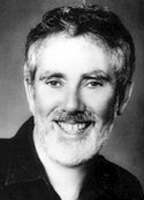
Robert Pinsky also has a distinctive way of reading. Is it Poet Voice? Here he reads "The Forgetting."
Follow this blog for all things poetry. To see our past prompts and more than 300 issues, visit our website at poetsonline.org
Can you learn to be a poet by studying poems? It might help, but no. But you can certainly learn about poetry and how to read poems.
The collection takes an unconventional approach to the art of poetry. Instead of rules, theories, or recipes, Pinsky emphasizes ways to learn from great work. There are 80 poems and Pinsky's introductions to each section take a writer’s view of specific works.
This is the close study of poems, which I have done in workshops. He notes William Carlos Williams’s “Fine Work with Pitch and Copper” for its intense verbal music. Emily Dickinson’s “Because I Could Not Stop for Death” for its wild imagination in matter-of-fact language. He directs us to Robert Southwell’s “The Burning Babe” for "surrealist aplomb." Observe the subtle meter in Wallace Stevens’s “The House Was Quiet and the World Was Calm.”
Robert Pinsky’s first two terms as United States Poet Laureate met such enthusiastic national response that he was appointed to an unprecedented third term. As Laureate, Pinsky founded the Favorite Poem Project, in which thousands of American readers, of varying backgrounds, ages, and regions, read their favorite poems. The videos at favoritepoem.org show that poetry has a vigorous presence in American culture.
Follow this blog for all things poetry. To see our past prompts and more than 300 issues, visit our website at poetsonline.org
It was my birthday last weekend I think most people are curious about with whom they share a birthday. My October 20 is shared with Mickey Mantle, Bela Lugosi, Kamala Harris, Viggo Mortensen, John Krasinki, Snoop Dogg, and Tom Petty. I did play baseball as a kid, but I was no Mantle. I do play guitar, but I'm no Petty. The birthdays that I most connect to are two poets.
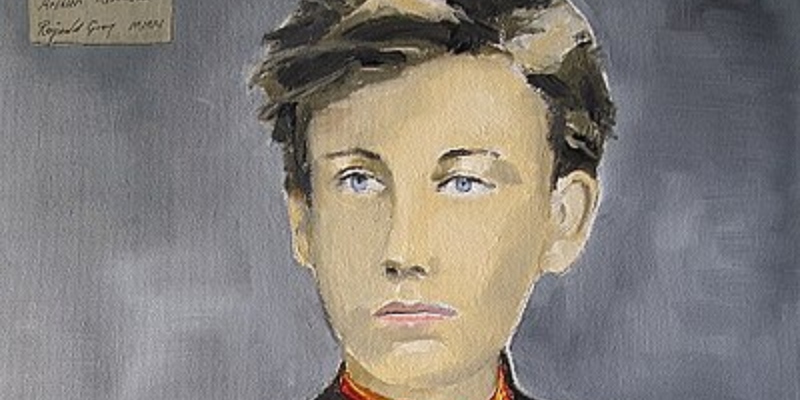
Arthur Rimbaud was a French poet known for his transgressive and surreal themes and for his influence on modern literature and arts, prefiguring surrealism. I've read his poetry and about his life and I don't feel we are similar in either our lives or writing. It did connect with me that at a point he just stopped writing and the reason seems to be that he had lost hope of being heard. I know that feeling.
My strongest connection is to the poet Robert Pinsky. I've met him several times at readings and shared our connections. He was also born in New Jersey (Long Branch, down the Jersey shore). In high school he played the saxophone and it was his "first experience of art, or the joy in making art." Like me, he was the first person in his family to go to college and we both attended Rutgers. In his freshman poetry class, he encountered "Sailing to Byzantium" by W.B. Yeats. He said: "It was the speed with which he covered the ground. Wow: 'artifice of eternity'!'' Pinsky typed up "Sailing to Byzantium" and hung it on his dorm room wall, and decided to become a poet himself. Pinsky was the first poet laureate consultant in poetry to serve three consecutive one-year terms.
In my freshman year, I discovered T.S. Eliot and his poetry took me to a very different place from the poetry I had been writing in high school.
William Butler Yeats is considered one of the greatest poets of the English language. He received the 1923 Nobel Prize for Literature. His work was greatly influenced by the heritage and politics of Ireland.
I reread that poem which I'm pretty sure I had read in high school (when I naively thought Yeats and Keats rhymed) and again in college, but it wasn't the epiphany that Pinsky had with the words. Rereading it five decades later, it is opening and closing lines that hits me hardest: "That is no country for old men... Of what is past, or passing, or to come."
I was too young for this poem when I first read it. It is about mortality and the frailty of the human body as we age. Yeats wrote this poem when he was 62 and beginning to address old age - though he would live another 11 years.
Yeats chose Byzantium as the setting for his poem because it represented a mythical, timeless realm of spiritual beauty and artistic excellence. It was at least a symbolic escape from the aging process and the material world of his own time. Byzantium's rich history in art, particularly its gold mosaics, further contributed to this idealization of a place where the soul could transcend mortality through creative expression.
The Byzantine Empire is long gone, but the legacy of the empire and its capital city, Byzantium, can still be seen today. The former capital of the Byzantine Empire, Constantinople, is now known as Istanbul, Turkey. The city is still considered a crossroads between Europe and Asia.
The poem still reads to me like the kind of poem I would never write. It feels old. I don't write poems that are very similar to Pinsky, though I am closer in style to him than Yeats.
Sailing to Byzantium by William Butler Yeats (1865 –1939)
That is no country for old men. The young
In one another’s arms, birds in the trees
—Those dying generations—at their song,
The salmon-falls, the mackerel-crowded seas,
Fish, flesh, or fowl, commend all summer long
Whatever is begotten, born, and dies.
Caught in that sensual music all neglect
Monuments of unageing intellect.
An aged man is but a paltry thing,
A tattered coat upon a stick, unless
Soul clap its hands and sing, and louder sing
For every tatter in its mortal dress,
Nor is there singing school but studying
Monuments of its own magnificence;
And therefore I have sailed the seas and come
To the holy city of Byzantium.
O sages standing in God’s holy fire
As in the gold mosaic of a wall,
Come from the holy fire, perne in a gyre,
And be the singing-masters of my soul.
Consume my heart away; sick with desire
And fastened to a dying animal
It knows not what it is; and gather me
Into the artifice of eternity.
Once out of nature I shall never take
My bodily form from any natural thing,
But such a form as Grecian goldsmiths make
Of hammered gold and gold enamelling
To keep a drowsy Emperor awake;
Or set upon a golden bough to sing
To lords and ladies of Byzantium
Of what is past, or passing, or to come.
Follow this blog for all things poetry. To see our past prompts and more than 300 issues, visit our website at poetsonline.org
Since the Poet Laureateship was created by an act of Congress in 1985, nearly half of the laureates have taken on a signature project to raise the national appreciation of poetry. The best of them have a life beyond their tenure and some of them have an online presence.
A good example is the American Life in Poetry project by Ted Kooser from 2004-2022 to create a space and a presence for poetry in American culture. American Life in Poetry provided newspapers and online periodicals with a free weekly column by Kooser that featured a poem from a contemporary American poet. The poems and columns remain archived online.
The Favorite Poem Project by Robert Pinsky was the first digital one I experienced. It is a way to celebrate, document, and encourage a public appreciation of poetry as well as acknowledge the role of poetry in the everyday lives of Americans. The project called for Americans to share their favorite poems with the nation.
Billy Collins' Poetry 180 was one I used in my classroom. It was his effort to make poetry an active part in the daily experience of American high school students, giving students a chance to read or listen to a poem on each of the 180 days of the school year. Two anthologies came from the project.
When I was a teen and first interested in writing poetry, I noticed in an almanac that I shared a birthday with the poet Arthur Rimbaud. I thought that perhaps because we shared a birthday (October 20) even though I was born 99 years later, perhaps we were similar.
I looked up Jean Nicolas Arthur Rimbaud. Right off, I realized that I had been pronouncing his name in my head incorrectly - not rim-baud but ræmˈ-boʊ. He was a French poet known for surreal themes, though he prefigured surrealism. He started writing at a very young age, was an excellent student, but abandoned formal education when he was my age and ran away from home to Paris during the Franco-Prussian War.
He was described as an enfant terrible of poetry. He was a literary bad boy, and became a mercenary arms dealer. He produced most of his writing in his late adolescence and early adulthood. He completely stopped writing literature at age 20, after he had put together assembling his last major work, Illuminations.
I was not a bad boy. I never dealt weapons. He wrote a lot of prose poetry and his poetry is nothing like mine.
Rimbaud
Years later, I discovered that the American poet Robert Pinsky also shares my birthday. Not only was he born on October 20 but we share a birthplace (New Jersey) and both received our BA at Rutgers College. Robert was born during WWII and I was born during the Korean War but at least we were born in the same century.
I like Pinsky's poetry, but it is not like my poetry. He was our Poet Laureate (1997-2000) and he is the author of nineteen books. I met him twice when he gave readings at the Dodge Poetry Festivals. I mentioned our shared birthday and he reminded me that we also share the day with NY Yankees legend Mickey Mantle. Mantle was my birthday inspiration as a kid. I wanted to become a Yankee. I was a decent ballplayer, played the outfield like Mickey, but though I got lots of hits and stolen bases, I could not hit those long balls.
Pinsky
Did I learn anything about poetry from my poetry birthday buddies? Yes. First off, I looked up their poetry which I had not read earlier. I learned some other things, but that brings us to this month's prompt.
Do some research and find out who was born on your birthday. (Just search on Wikipedia for the date to start.) See if you find a poet. Any connections to your own life or poetry? You could also choose a writer or really anyone that interest you or you feel some connection to as the inspiration for your poem.
Postscript: I could not find a model poem for this prompt, (If you know a poem that fits, post it in a comment.) but I did find that Pinsky and Rimbaud both have poems titled "Antique." Are they connected? Did Pinsky know Rimbaud's poem and was he influenced by it? (Got any answers? Post that in a comment.) Give them a read: "Antique" by Robert Pinsky and "Antique" by Arthur Rimbaud.
Boston University and edX is offering a free, six-week, online poetry course (a MOOC - Massive Open Online Course) taught by Robert Pinsky, Duy Doan, Laura Marris, Calvin Olsen and Tomas Unger.
The course launches March 29, 2016. The class covers a wide range of material, from classics to work by contemporary poets. According to Pinsky, “this course is based on the conviction that the more you know about an art, the more pleasure you will find in it.”
Rather than following particular schools of poetry or trends, the lectures, discussions, and readings of the course focus on elements of the art itself, from poetry’s historical relation to courtship to the techniques of sound in free verse.
From the edX website:
Poetry lives in any reader, not necessarily in performance by the poet or a trained actor. The pleasure of actually saying a poem, or even saying it in your imagination—your mind’s ear—is essential. That is a central idea of “The Art of Poetry,” well demonstrated by the videos at favoritepoem.org: the photographer saying Sylvia Plath’s “Nick and the Candlestick,” the high school student saying Langston Hughes’ “Minstrel Man.” Those readers base what they say about each poem upon their experience of saying it.
The course is demanding, and based on a certain kind of intense reading, requiring prolonged, thorough— in fact, repeated—attention to specific poems.
The focus will be on elements of the art such as poetry’s historical relation to courtship; techniques of sound in free verse; poetry and difficulty; kidding and tribute—with only incidental attention to “schools,” jargons, categories, and coteries.
Learners are encouraged to think truly, carefully and passionately about what the poem says, along with how the poem feels in one’s own, actual or imagined voice. As Robert Pinsky says, in the Preface to Singing School: “this anthology will succeed if it encourages the reader to emulate it by replacing it . . . create your own anthology.” In a comparable way, this course hopes to inspire a lifelong study of poetry.
I enjoy hearing poems read aloud, but not everyone can get to readings in their area, especially ones by well-known poets. And, of course, we only have authors recorded reading their poetry going back about 100 years.
Although the site launched in April 2009, I only recently discovered Poems Out Loud. It features recorded readings by well-known and award-winning poets, columns and general poetry news.
Portrait of a Woman by Bartolomeo Veneto,
traditionally assumed to be Lucrezia Borgia.
It seems that the site stopped adding new content back in 2011, but in the archive and on others like are plenty of opportunities to discover poets and poems.
Recently, someone asked a question on Facebook about the poet Walter Savage Landor. I confess that I had never heard of him.
A quick search turned up lots of links, including one to his poem "On Lucretia Borgia's Hair" read by Robert Pinsky on the Poems Out Loud site.
I have heard of Lucretia (AKA Lucrezia) Borgia and the 2011 TV series, The Borgias, brought that family back into discussions.
The family came to epitomize Machiavellian politics and sexual corruption in the time of the Renaissance Papacy. Lucrezia is seen as a femme fatale in many artworks, novels, and films.
So, I clicked over to the poem.
I like the short text attached to the audio:
"The story is that the poet Leigh Hunt showed Landor a long, blonde strand of hair—said to be stolen from an Italian museum by Byron—of the glamorous, powerful, nefarious Lucretia Borgia. (It is tempting to think that the Italians who ran the museum were accustomed to English gentlemen stealing the purported hair several times a month, and that the museum replaced it each time from an ample supply.) Landor, a great master of the epigram form, composed many dazzling poems of as few as two lines. In this one, the reach of the grammer across the rhyme-word “august” is expressive, a kind of flourish or fanfare preparing the way for the curt “Now thou’rt dust.” Different published versions have the final word as “unfold” and “enfold”—an interesting small ambiguity in itself, the hair as keeping the history it represents either unfolded to us, or enfolded away from us."
The poem is only four lines, and honestly, not one I would probably read if I stumbled upon it, brief as it is. But hearing it read, it worked for me.
Borgia, thou once wert almost too august
And high for adoration; now thou’rt dust.
All that remains of thee these plaits unfold,
Calm hair, meandering with pellucid gold.
Such is the power of poetry read aloud.
For more poetry read aloud, check out these sites:
Jack Prelutsky, a popular children's poet, met then-U.S. poet laureate Robert Pinsky in 2000.
Prelutsky said, "I'm something you're not." "What's that?" Pinsky asked. Prelutsky visits hundreds of schools and libraries where his poems are laminated and posted on the walls. "I'm the poet laminate."
Now, at 66, Prelutsky has been named the nation's first children's poet laureate by the Poetry Foundation.
I know that children's poetry doesn't get much respect from the "grownup" poetry world. They don't get invited to the Dodge Poetry Festival.
But my boys really loved Shel Silverstein and Prelutsky when they were new readers, and even wrote their own imitations, and for that I thank them.
He has published more than 40 books, including Behold the Bold Umbrellaphant and Other Poems, and has more than 1 million copies in print. The folk singer turned poet recites and sings on the audio version of his latest books.
In his 2 years as laureate, he will give speeches, recommend other poets online and, something I don't recall any laureates doing, he plans a contest to give away part of the laureate's $25,000 award. (He'll ask children to write why their school libraries need more books.)




 called
  and the site is sponsored by that book's publisher,