Absinthe is an alcoholic drink that gained a reputation for being a drink for poets and artists. Absinthe rose to popularity in late‑19th‑century France, especially in the cafés of Montmartre and the Latin Quarter — the same places where poets, painters, and musicians gathered.
Some of the most famous absinthe‑drinking poets were Charles Baudelaire, Paul Verlaine, Arthur Rimbaud, and later Ernest Hemingway and James Joyce. Absinthe became associated with poets because it was cheap, strong, ritualistic, and mythologized as a way to summon "the Muse."
That Muse was la fée verte, the Green Fairy, a muse who whispered inspiration to drinkers. Absinthe was high-proof and relatively cheap, and it became the drink of choice for the "Green Hour" (L'Heure Verte), a daily ritual in cafes.
There was a ritual connected to absinthe that seemed almost alchemical and added to the mystery and myth. You would drip iced water over a sugar cube perched on a slotted spoon over the absinthe-filled glass. This turned the green drink a cloudy white. This also lowered the alcholic hit and bitterness but brought forward floral notes. This theatricality made it feel more like a potion than a beverage. Artists embraced the idea that it opened the mind to visions, even though its supposed hallucinogenic effects were much exaggerated.

Charles Baudelaire is one of the earliest literary figures linked to absinthe. Although he didn’t write poems about absinthe directly, his fascination with altered states, decadence, and artificial paradises made the drink a natural part of his mythos. His prose work Les Paradis Artificiels explores intoxication and creativity.
In "Le Poison" (The Poison) by Baudelaire from his Les Fleurs du mal (The Flowers of Evil), he compares the mind-altering effects of wine and opium before introducing a third intoxicating power. While he does not say the word "absinthe" explicitly, it is widely accepted by literary scholars that the third verse is an ode to it, playing on its signature color and its nickname as a liquid lake of dreams.
All this is nothing to the poison that spills
From your eyes, from your green eyes
Lakes where my soul trembles and is turned upside down...
Paul Verlaine was a heavy absinthe drinker whose turbulent life — including his relationship with Rimbaud — became part of the Green Fairy legend. Absinthe appears in his letters and memoirs, and its haze fits the languor and melancholy of his Symbolist style.
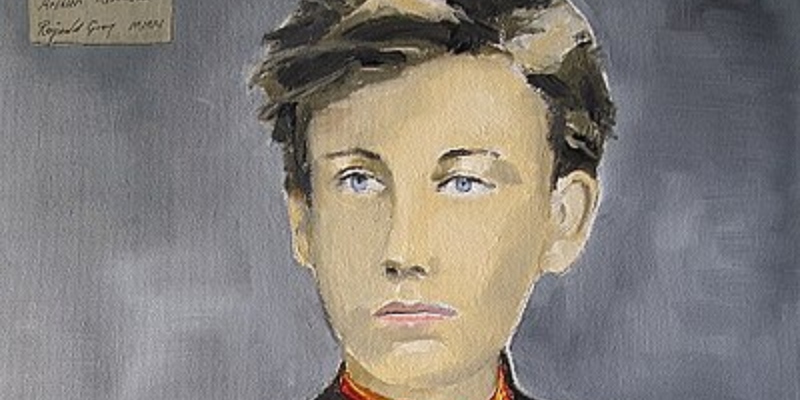
Arthur Rimbaud drank absinthe with Verlaine during their infamous Paris and London years. His visionary, hallucinatory poetic style helped cement the idea that absinthe unlocked new modes of perception.
In the prose poem "Absinthia Taetra" by Ernest Dowson, a central figure in the English Decadent movement, he captures the aesthetic, sensory experience of preparing the drink.
Green changed to white, emerald to opal; nothing was changed. The man let the water trickle gently into his glass, and as the green clouded, a mist fell from his mind.
Ernest Hemingway is one of the 20th‑century devotees who helped revive absinthe’s mystique. He wrote about it in For Whom the Bell Tolls and drank it in Paris and Spain. His “Death in the Afternoon” cocktail was absinthe mixed with champagne.
James Joyce also drank absinthe in Paris during his early years. While not central to his writing or the mythology, it was part of the bohemian café culture that shaped Modernism.
Read further about the science and mythology of absinthe
Follow this blog for all things poetry.
To see our past prompts and more than 300 issues,
visit our website at poetsonline.org