Showing posts with label technology. Show all posts

June 8, 2023

Our Random Poetry Line Generators Are Not AI

Image: Mohamed Hassan


On the main  Poets Online website, we used a tool back in 1999 that I called a "random poem generator." They were two pages that had code that could generate a random line that can be used to start a poem or just give you an idea for a poem based on the line. You could even generate multiple lines and try putting them together as a poem. (We had a few poems submitted that used the tool in 1999.)

I thought about that again recently because of all the talk about artificial intelligence chatbots, such as ChatGPT, and how they can "write a poem." My own experiments with that AI produced some terrible "poems" full of bad rhyme and no emotion. My little random line generators - so crude they cannot be called any kind of AI - were meant more like our writing prompts.

If you have been in writing workshops, you probably have had a leader suggest some words or lines as a starting place. The idea is that this will be a line that you would not have thought of, and because there is some randomness in the process, you will get some interesting combinations of words and phrases that might take your writing to a new place. 

I went to the generators and asked for two lines today and I rather like these that came up for me:  "After the rain of our imagination, young lovers sing, Before the moment of longing the old ones sleep,"  I don't know where that would lead me and maybe I would only use fragments such as "the rain of our love" or "in the moment of longing" or some other variation. 

The pages are still online, so give them a try if you need a little prompting to trigger the Muse. Perhaps try it for our current call for submissions for the next issue of Poets Online.


November 6, 2022

Prompt: STEM

opensource.com via Flickr

I worked for a decade at a STEM university. STEM stands for science, technology, engineering, and mathematics. That doesn't immediately sound very poetic, but poets do write about all those fields at times, and there were poets at the university. 

The first "science" poem I remember reading in a school anthology is "When I Heard the Learn’d Astronomer" by Walt Whitman which is basically an anti-science poem. 

When I heard the learn’d astronomer,
When the proofs, the figures, were ranged in columns before me,
When I was shown the charts and diagrams, to add, divide, and measure them,
When I sitting heard the astronomer where he lectured with much applause in the lecture-room,
How soon unaccountable I became tired and sick,
Till rising and gliding out I wander’d off by myself,
In the mystical moist night-air, and from time to time,
Look’d up in perfect silence at the stars.

We have all probably sat through some of those lectures and wanted to walk out and just look up at the sky.

There were metaphysical poets, like Donne and Marvell. Metaphysics is the branch of philosophy that studies the fundamental nature of reality, the first principles of being, identity and change, space and time, etc. Not physics in the scientific sense but with some science in the conceits of their philosophy.

Edgar Allen Poe wrote a "Sonnet - To Science." Jane Hirshfield went poetic about proteins.  

Sarah Howe writing about the poetry of astrophysics wrote "It’s not a new idea that poets and scientists should talk to one another. During a visit to Florence in 1638, the young John Milton sought out Galileo Galilei. By then a blind old man, Galileo was living under house arrest, confined by the Inquisition for asserting, after his celestial observations, that the Earth revolved around the sun. Years later, old and blind himself, Milton would pay homage—in his epic poem about the origins of our universe, Paradise Lost—to the great astronomer, who makes a cameo appearance with his telescope pointed at the sun’s dark spots."

Howe's poem titled "Relativity" is dedicated to Stephen Hawking and begins:

When we wake up brushed by panic in the dark
our pupils grope for the shape of things we know.

Photons loosed from slits like greyhounds at the track
reveal light’s doubleness in their cast shadows...

In "The Sciences Sing a Lullabye," Albert Goldbarth lets the sciences sing.

Physics says: go to sleep. Of course
you're tired. Every atom in you
has been dancing the shimmy in silver shoes
nonstop from mitosis to now...
Geology says: it will be all right. Slow inch
by inch America is giving itself
to the ocean...
Astronomy says: the sun will rise tomorrow...

All these are model poems for this month's call for submissions, but I chose Nick Flynn's "Cartoon Physics, part 1" as our example on the website in which he plays with physics the way cartoons play with physics.

...that if a man draws a door on a rock
only he can pass through it.
Anyone else who tries
will crash into the rock... 

Cartoon physics teaches us that

that if a man runs off the edge of a cliff
he will not fall

until he notices his mistake.

Physics seems to attract more poets and I had a physics course in college for non-majors that was nicknamed "physics for poets." We were all theoretical physicists in that lecture hall talking about time travel, quantum mechanics, parallel universes, and the physics that interests the writers of stories and makers of films of science-fiction. 

Of course, science doesn't always get it right. I wrote elsewhere about some "wrong science" which can be funny in retrospect and might even be poetic. 

Our prompt this month is science and more specifically the STEM disciplines and even more specifically we'd like to see some play in the poems.  

Submission Deadline: November 30, 2022.


Nick Flynn is an American writer, playwright, and poet. His writing is characterized by lyric, distilled moments, which blur the boundaries of various genres. Many of his books are structured using a collage technique, which creates narratives with fractured, mosaic qualities. He is the author of five poetry collections, including I Will Destroy You (Graywolf Press, 2019). Flynn was born in Scituate, Massachusetts in 1960. His debut poetry collection, Some Ether (2000), won the PEN/Joyce Osterweil Award. He has also published several memoirs including Another Bullshit Night in Suck City. He divides his time between Texas, where he teaches at the University of Houston, and Brooklyn, New York. His website is nickflynn.org 


Visit our website at poetsonline.org

November 14, 2018

Can a robot write poetry?

Can a robot write poetry? That is the question posed in the headline of an article on IrishTimes.com. The first reaction of most poets would probably be a quick No. 

The article is really about technology, but my own answer is that artificial intelligence can write poetry. One reason I believe that is because it is so hard at times for us to say that a poem is a Poem. 

Artificial intelligence (AI) has had trouble with pathos, empathy and humor. It is great at learned tasks but creativity without human input has been more difficult to achieve.

Computer scientists (in this example, at Microsoft Research Asia) are working on designing AI that can be creative. You have probably seen or heard of examples of AI writing music or creating images. This new experiment attempts to have AI write poetry using images as a "writing prompt."

You look at an ocean wave, a painting, a foggy sunrise and you are inspired to write. Are all your resulting poems great?  

Up to this point, AI auto-generation of text has been getting better. Computers/robots/AI (choose your term) can write sports articles based on stats about a game and some rules about the descriptive language used in sports reporting. An algorithm to be poetic is a ot harder to create.

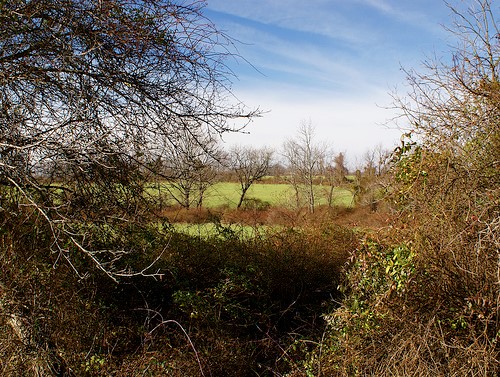
These researchers trained their AI with 8,000 images. When is "looked at" this bare winter trees country scene, 


it wrote this haiku-like (after all, it is Microsoft Asia) poem:

Sun is shining
The wind moves
naked trees
You dance

Is it a poem?  If one of the elementary students I work with in a workshop gave it to me, I would take it as a poem. I think I'd accept it as a short form poem from almost anyone, in fact.  

Is it a good poem? That is always harder to answer.


July 8, 2016

Conversations: When Is a Poem Finished?

Moore

People often cite the poet Paul Valéry as the source of the quote " A poem is never finished; it is only abandoned."  That is actually a paraphrase of Valéry by W. H. Auden from 1965. (See W. H. Auden: Collected Poems "Author's Forewords.") What Valéry originally wrote was less of a sound bite: "A work is never completed except by some accident such as weariness, satisfaction, the need to deliver, or death: for, in relation to who or what is making it, it can only be one stage in a series of inner transformations." But many poets can identify with the sentiments in either.

When do you let go of a poem and stop revising?

An article about Marianne Moore and her continual revision compares her to any contemporary poet who uses software like Word and "tacks changes" leaving digital footprints of where the poem has traveled.


Moore doesn't seem to have ever been satisfied that her poems were completed. Her poem “Poetry,” first appeared in 1919 and was about 30. In the published 1967 version it was down to 3 lines. She also changed titles - "A Graveyard” became “A Grave,” for example.

In the Internet age, we have lots changes made to things published online - from simple typos in a poem or a Facebook post, to Wikipedia entries (always being revised). Lots of revisionist history.

Google Docs tracks each edit to the page. But if you're well known and post a Tweet, then decide to delete it after you get some bad feedback, chances are the original has been captured in a screenshot by someone for posterity.

When is a poem finished for you?  Pre-digital, when I wrote all my poetry in longhand on paper, I saved all the drafts which included revisions and proofreading changes. When I typed the poem, I considered it finished. As a hunt-and-peck typist, retyping something was an effort and I avoided it. When an electric typewriter with a correction tool appeared, and then with the first word processors, it was so much easier that I increased my revisions.

For me, most of my poems are finished when they are published. I can only think of two times when I changed a poem after it appeared in a publication. Perhaps, if I ever make it to the point where I need to put together that "Selected Poems" collection, that will change.

That article views Moore with the ways she changed her work as "more of a digital-age artist than any of her contemporaries. Her poems were as malleable as something written online."

I actually know several very well known poets who still avoid the computer, email and word processing. Two of them have "typists" who interpret their handwriting and print copies which they edit with a pencil and give back for retyping. There may be some thoughtful advantages to that process, and some of you might do the same thing even though you are your own typist.


As another of our online "Conversations," let us know in a comment here about your revision process and particularly how you know when a poem is finished. Are you easy about letting go, or do you revise until as long as you can, like Marianne Moore?

February 23, 2013

Tweeting Iambic Pentameter


Another piece of technology is mixing with poetry.

That hesitation right before a kiss
I don't remember ever learning this
I've never had a valentine before
I'm not a little baby anymore

If that is poetry, it's technological "found poetry."  Those rhyming couplets written in iambic pentameter come from Twitter and were found by an algorithm. Yes, those ten-syllable lines of alternating emphasis that we learned about in school when we studied Shakespeare, sonnets and blank verse have been pulled from tweets by a program called Pentametron.

Pentametron (@pentametron on twitter, which you can follow without joining twitter itself)  is set up to monitor public tweets, pull out those in iambic pentameter, look for pairs that rhyme, and then retweet them as a couplet.

The site's motto is:
"With algorithms subtle and discrete
I seek iambic writings to retweet."

Is it poetry? That's your call. But it is interesting that these random couplings sometimes produce logical groupings.

I haven't got the mindset anymore
the tiny inner voice becomes a Roar!
Another boy without a sharper knife.
Closed eye and hoping for a better life

This isn't the first poetry via Twitter site that I have written about. Earlier there was the "Longest Poem in the World" which is still running.

In an NPR interview, the creator of Pentamentron, Ranjit Bhatnagar, said that he had been "... inspired by the exquisite corpse games of the surrealists" and realized that Twitter could supply "an endless waterfall of tweets."

Some make sense -

I wanna be a news reporter, yo
I never listen to the radio

I pay attention to details okay.
Its gonna be a busy day today :(


and others are... well, not so clearly connected

She's like a rainbow, painted black and white.
Not going to the ball tomorrow night.

Of course, a lot of people who don't regularly read poetry might say that "real" poems often don't make sense to them, so...

Pentrametron generates 15 to 20 couplets of 140-characters or less on an average day.


October 25, 2010

Haiku 575 Twitter 140


I'm not claiming that Twitter is poetic, but -

I have read several articles online about using that 140 character posting service to share haiku.

Sun Microsystems' ex-CEO, Jonathan Schwartz, was an early company blogger and when he resigned (after the company was acquired by Oracle) he posted the news as a haiku on his Twitter feed.

The public radio show Fresh Air asked listeners once to write comments in haiku form, and tag their haiku with #publicradiohaiku on Twitter to share with others.

It has spread and "twaiku", as some call these Twitter haiku, are now online for NASCAR haiku, cat haiku, zombie haiku et cetera. Jimmy Kimmel offered tickets to his show to whoever tweeted the best haiku about the final episode of the TV show Lost.

Some haiku on Twitter to look at and follow would include http://twitter.com/issa_haiku and http://twitter.com/dengary

You can post your own Twitter haiku and tag them as #haiku for our readers to follow. 


September 29, 2010

The I Ching Poetry Engine

I am always a bit suspicious of electronic poetry and software that "generates" poems. Still, I am pretty tech-oriented and have dabbled in that area myself.

Poets Online posted its own poetry first line generator years ago at poetsonline.org/generator.html
and a second version at poetsonline.org/generator2.html

We used them as a prompt, so that a user might generate a line or two to get started.

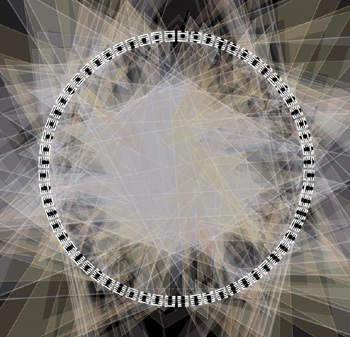
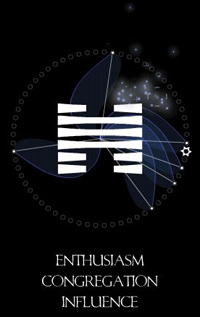
There's an I'Ching Poetry Engine web site that gives you 64 uniquely generated states. If you're not familiar with the ancient I Ching, also known as the Book of Changes, it is one of the oldest of the Chinese classic texts.

It is a divination system for foretelling the future, somewhat comparable to Western geomancy. It is still used for that purpose in both Western cultures and modern East Asia in the same way that someone might use tarot cards.

The site's tech explanation is complex, but the best way to understand it is to just go to the site and play.

The site will gnerate "poems" of five lines each and approximately 30 words. Some poems enter a looping phase, creating much longer narratives.

After each poem generates and displays all of its words, the I'Ching interface returns, and the observer begins supplying the seeds for the next poem.

You can test drive it at http://www.levitated.net/exhibit/iching/and also see excerpts of generated poems


    Thanks to Steve for sending us the site.

    February 19, 2010

    Found Poetry: Status Updates

    One complaint you might hear from poets who dislike "found poetry" is that it's not poetry. (There's another group with the same argument for prose poems.)

    Because this month's writing prompt is found poems, I have been more in tune with "finding" poems. When I saw that Facebook allowed me to grab some of the "status updates" I have posted there during 2009, I tried it.

    Now, "status" (as defined in the Merriam-Webster Online Dictionary) is a noun coming from Latin (see state) into English circa 1630 and meaning
    1. position or rank in relation to others
    2. state or condition with respect to circumstances

    Then what was my state or condition in 2009 according to my Facebook life?


    Is there a poem in there? Maybe. I came up with this at first look.

    cardinals picking dried berries.
    days don't seem any longer
    on this rainy day
    April is not the cruelest month


    It's just interesting to think about something like your online life as being recorded and then looking at it in the context of a poem. Just throwing out ideas...

    June 26, 2009

    The Longest Poem in the World?

    It is "The Longest Poem in the World" - though some of you may question its claim to be a poem at all.

    It is a kind of found poem made by aggregating real-time public Twitter updates and selecting those that rhyme. It a project of Andrei Gheorghe.

    It is constantly growing at about 4000 lines per day.

    If you click the ellipsis [...] at the bottom of the poem, you can see more of it.

    What do you think - poem, or online tech babble?

    It's too informal to be a renga, but perhaps it is a new form.