Showing posts with label e.e. cummings. Show all posts

July 26, 2023

Punctuation and Poetry


We used punctuation as part of a prompt in 2012 that featured a poem by Thomas Lux - see poetsonline.org/archive/arch_punctuation.html


PUNCTUATION: Some poets use it. Some don't.

Of course, there are many poems where punctuation is most definitely necessary, but there are also cases where it is not. Are there any "rules" for its usage?

Students have asked about when they should use punctuation - or should they use it or do they have to use it?

When lines are short - three words or less - punctuation (commas and periods) can look silly.

“Cut out all these exclamation points. An exclamation point is like laughing at your own joke,”
 wrote F. Scott Fitzgerald. Fitzgerald may not have been a fan of the exclamation point, but the New York School of poets took a liking to it.

  • Walt Whitman liked... the ellipsis.  
  • Emily Dickinson was fond of using -  the dash. 
  • A.R. Ammons did things with: the colon.  
  • E.E. Cummings, besides his experiments with Upper and LOWER case, liked to make use of (parentheses).
Much of this has been studied and I'm sure there are more than a few graduate theses out there on related topics.

From the Poets.org Guide to Emily Dickinson's Collected Poems (pdf download)
A typical manuscript for a poem might include several undated versions, with varying capitalization throughout, sometimes a "C" or an "S" that seems to be somewhere between lowercase and capital, and no degree of logic in the capitalization. While important subject words and the symbols that correspond to them are often capitalized, often (but not always) a metrically stressed word will be capitalized as well, even if it has little or no relevance in comparison to the rest of the words in the poem. Early editors removed all capitals but the first of the line, or tried to apply editorial logic to their usage. For example, poem 632 is now commonly punctuated as follows:
The Brain – is wider than the Sky –
For – put them side by side –
The one the other will contain
With ease – and You – beside –

The Brain is deeper than the sea –
For – hold them – Blue to Blue –
The one the other will absorb –
As Sponges – Buckets – do –

The Brain is just the weight of God –
For – Heft them – Pound for Pound –
And they will differ – if they do –
As Syllable from Sound –

"E. E." Dickinson and E.E. Cummings may have more in common in this regard than you would expect. Cummings made his use of punctuation so much of a style that it may seem to be a parody at times. This poem about a grasshopper has just about everything happening in it.


r-p-o-p-h-e-s-s-a-g-r
   who
a)s w(e loo)k
upnowgath
  PPEGORHRASS
        eringint(o-
  aThe):l
         eA
           !p:
S                                      a
                 (r
rIvInG               .gRrEaPsPhOs)
                                   to
rea(be)rran(com)gi(e)ngly
,grasshopper;

He uses words, punctuation, and space to create a "concrete" visual image of a grasshopper jumping. The word and letter jumble makes more sense as we dig deeper and yet some of it is for pure visual rather than reader effect.

I have used some of his poems with children who like finding a hidden poem. They find the jumping-all-about grasshopper r-p-o-p-h-e-s-s-a-g-r who as we look up now gathering to leap leaps arriving...

They realize the poem is not just meant to be "read."

And then, there's the ampersand.  &  Not really punctuation, but an abbreviation of a sort. As I have written on another blog:.
The ampersand is a curious thing in our language that dates back to the 1st century A.D.

Originally, it was a ligature of the letters E and T. What's a ligature? In writing and typography, a ligature occurs where two or more graphemes are joined as a single glyph. Ligatures usually replace consecutive characters sharing common components.

Suffice it to say, the ampersand is the most common one we use in English.

"Et" is Latin for "and" - as in et cetera, which is such a mouthful that we feel the need to shorten even that to etc. It can actually be further shortened as &c.
The & picked up traction in poetry with the Beats and the Black Mountain poets. (Ginsberg: "blond & naked angel") and e.e. cummings, Frank O'Hara, Amiri Baraka, John Berryman, and Nick Flynn. 

April 5, 2019

Prompt: Reverdie


The reverdie is an old French poetic genre. It originated with troubadour ballads of the early Middle Ages and so many of them were song lyrics. They are usually about the arrival of spring. The word "reverdie" translates as "re-greening." There are some traditions in those old poems and lyrics, such as addressing spring as a beautiful woman. Reverdies were often dancing songs and were popular during the time of Chaucer.

The Middle English reverdie that begins "Svmer is icumen in/ Lhude sing cuccu" can be translated as "Summer has arrived / Sing loudly, cuckoo! /The seed is growing / And the meadow is blooming /And the wood is coming into leaf now / Sing, cuckoo!" This "Cuckoo Song" is one I always find odd because it says that summer is coming and yet all the images seem to be of spring.

There are many, perhaps too many, poems about spring. In lists of them, you will find Eliot's "The Waste Land." I like Eliot's poetry, but his images of spring are pretty grim. The poem's first section is subtitled "The Burial of the Dead" and its opening is often quoted:

April is the cruellest month, breeding
Lilacs out of the dead land, mixing
Memory and desire, stirring
Dull roots with spring rain.
Winter kept us warm, covering
Earth in forgetful snow, feeding
A little life with dried tubers.

Spring and All is a volume of poems by William Carlos Williams and the section we consider for this prompt is "By the road to the contagious hospital" - which also sounds pretty grim.

By the road to the contagious hospital
under the surge of the blue
mottled clouds driven from the
northeast-a cold wind. Beyond, the
waste of broad, muddy fields
brown with dried weeds, standing and fallen

patches of standing water
the scattering of tall trees

The landscape is "Lifeless in appearance" but Williams knows that "sluggish dazed spring approaches" and the poem is more optimistic in this very early spring.

They enter the new world naked,
cold, uncertain of all
save that they enter. All about them the cold, familiar wind- Now the grass, tomorrow
the stiff curl of wild carrot leaf
One by one objects are defined-
It quickens: clarity, outline of leaf...
Still, the profound change
has come upon them: rooted, they
grip down and begin to awaken

E. E. Cummings describes Spring as being "like a perhaps hand
(which comes carefully
out of Nowhere)arranging
a window,into which people look(while
people stare
arranging and changing placing
carefully there a strange
thing and a known thing here)and
changing everything carefully

What we asked poets to do this month was to write a reverdie about the arrival of spring but - is this is not easy - say something that has not been said by poets before.

In "Spring Snow" by Arthur Sze, I see a picture of the spring around me currently - a mix of winter and summer that has not been well blended.

A spring snow coincides with plum blossoms.
In a month, you will forget, then remember

what I like about the poem is the unexpected images that follow in his reverdie. Snow and plum blossoms seem like a wrong coincidence, but it occurs in haiku fairly often, But he follows with several images of that odd mix.

when nine ravens perched in the elm sway in wind.

I will remember when I brake to a stop,
and a hubcap rolls through the intersection

In "National Poetry Month" the poem speaks by itself, according to Elaine Equi. The poem mentions April, but can you find the spring within it?

Sometimes the poem weaves
like a basket around
two loaves of yellow bread.

“Break off a piece
of this April with its
raisin nipples," it says.

“And chew them slowly
under your pillow.
You belong in bed with me.”

October 27, 2012

The Haiku of E.E. Cummings

I have been rereading in Complete Poems, 1904-1962  by  E.E. Cummings this month. He was a favorite of mine in my youth and a poet that always caught my younger students' attention when I presented his poems.

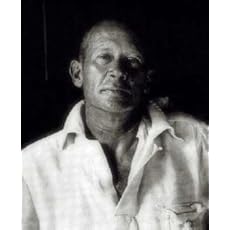
Edward Estlin Cummings (October 14, 1894 – September 3, 1962), known as E. E. Cummings, with the abbreviated form of his name often written by others in lowercase letters as e.e. cummings (in the style of some of his poems) was an American poet, painter, essayist, author, and playwright. His body of work encompasses approximately 2,900 poems, two autobiographical novels, four plays, and several essays, as well as numerous drawings and paintings.

Of course, they all wanted to play with capitalization and spacing and the wordplay that catches the eye in his poetry. (And they often began to write their names in lower case!)

But from what I can tell, Cummings has fallen off the reading list. It may be that his playfulness works against him as a "serious" poet, though he certainly was serious.

What I have noticed in my rereading is the haiku-like qualities of many of his poems. A great example is the poem below which is paired with a Basho haiku from 250 years earlier.


                                                                            l(a
                                                                            le
                                                                            af
Won’t you come and see                                      fa
loneliness? Just one leaf
from the kiri tree.                                                  ll
-  Basho, 1692                                                     s)
                                                                            one
                                                                             l
                                                                             iness

Readers have noted the "oneliness" of Cumming's poem. It is one of his poems that needs to be seen on the page and doesn't work as a reading. That's a good lesson for new poets.

&sun&
sil
e
nce
e
very
w
here
noon
e
isexc
ep
t
on
t
his
b
oul
der
a
drea(chipmunk)ming 

This small poem, as tall as a standing chipmunk, was one I have used with many students at different levels. With a little push from shore by me, they usually would find that "everywhere" is also "here" and even "very here" (the sun IS everywhere but it is VERY here in that spotlight on the chipmunk). It is "noon" (the time) and it is "noon e - no one" in this empty place. It is "this boulder" but it is "his boulder" for that moment. Finally, it is "dreachipmunkming" - the word game of a chipmunk in the middle of dreaming.

When the text is laid out horizontally, it reads as l(a leaf falls)oneliness. In other words, a leaf falls is inserted within the first two letters of loneliness. In haiku poetry, the image of a single falling leaf is a common symbol for loneliness. That loneliness is enhanced by the structure of the poem and reminds the reader that separation is often the cause of loneliness. As he often does, Cummings divides words like loneliness to emphasize the one within it. Even the isolated letter l at top appears much like a number 1 to "title" this untitled poem.


Another similar "haiku" from Cummings is one that students discover is the image of  "this one snowflake alighting upon a gravestone" but which appears on the page as:

one
t
hi
s
snowflake
(a
    li
      ght
    in
g)                                                                                      
is upon a gra
v
es
t
one
It's an extreme example of a way to construct a haiku on a page, but a good lesson in spacing, line breaks, and "concrete" poetry. I have asked poets in workshops to take a haiku they like and do the same thing. The process forces you to slow down and really consider those words. And that is always a good thing.


RESOURCES

http://www.gvsu.edu/english/cummings/Welch4.htm

The E.E. Cummings Society

Books by E. E. Cummings