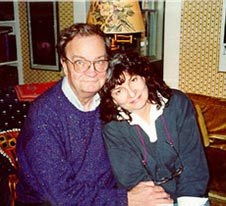
Showing posts with label Jane Kenyon. Show all posts

July 7, 2026

Prompt: At The End Of


For our July prompt, we look at Jane Kenyon’s poem “Three Songs at the End of Summer,” which features three portraits of late summer.

For our August issue, we ask for poems that use her title as a starting place. Not poems about summer, but about endings. Your title should be "Three ______ at the End of ________."  For example, you could write "Three Scenes at the End of an Affair," or "Three Haiku at the End of Life." You might write three stanzas, or three short poems, three sections, or even "Three Lines at the End of Day."

I do like how Jane's poem's three parts are connected through nature and also distinct in their sounds, moods, and atmosphere. Her second section consists of two three-line stanzas. The poem ends with lines that lead us gently into autumn. The poem views the end of August as the end of summer, the way young people often mark the end of summer with the start of another school year.

I had the new books—words, numbers,
and operations with numbers I did not
comprehend—and crayons, unspoiled
by use, in a blue canvas satchel
with red leather straps.

SUBMISSION DEADLINE: July 31


Jane Kenyon (1947–1995) was an acclaimed American poet and translator known for her luminous, spare, and emotionally resonant verse. Her life and work deeply chronicled her lifelong struggle with clinical depression, her spiritual faith, and the quiet beauty of rural New England. 

She was married to poet Donald Hall. Following their marriage in 1972, the couple relocated to Hall's family home Eagle Pond Farm in Wilmot, New Hampshire. That location provided the natural imagery for much of her writing.

Her poetry includes From Room to Room (1978), The Boat of Quiet Hours (1986), Let Evening Come (1990) and Constance (1993). Her Collected Poems contain all four collections.


Follow this blog for all things poetry.
To see our past prompts and more than 300 issues,
visit our website at poetsonline.org

September 11, 2025

At the End of Summer

It is not really the end of summer. In 2025, the autumnal equinox will occur on Monday, September 22 to make it astronomically official. But it does feel like the end of summer seeing students returning to classes, and a few signs of autumn appearing in nature.

Here is the first section of Jane Kenyon's  "Three Songs at the End of Summer"

A second crop of hay lies cut
and turned. Five gleaming crows
search and peck between the rows.
They make a low, companionable squawk,
and like midwives and undertakers
possess a weird authority.

Crickets leap from the stubble,
parting before me like the Red Sea.
The garden sprawls and spoils.

Across the lake the campers have learned
to water ski. They have, or they haven’t.
Sounds of the instructor’s megaphone
suffuse the hazy air. “Relax! Relax!”

Cloud shadows rush over drying hay,
fences, dusty lane, and railroad ravine.
The first yellowing fronds of goldenrod
brighten the margins of the woods.

Schoolbooks, carpools, pleated skirts;
water, silver-still, and a vee of geese."

by Jane Kenyon
  -  read the full "Three Songs at the End of Summer" from Poetry

 
Though this is not hay, but a Wheatfield With Crows, one of Van Gogh's most famous paintings, it feels right for this time of year. It has often been claimed that this was his final work, and that the dead-end path and the threatening sky with crows heralded his approaching death. That symbolic interpretation is a persistent myth unsupported by concrete evidence.

Image: Vincent van Gogh, CC BY-SA 2.0, via Wikimedia Commons

September 15, 2017

The Poetry of Death

Donald Hall and Jane Kenyon

When death, as public as a President or as private as a lover, overwhelms us, it speaks itself in elegy’s necropoetics.


I recently read Donald Hall's article in The New Yorker, "The Poetry of Death." It sounds like a real downer, but I recommend that you give it a read.

Many readers of this blog probably know that Donald Hall was married to Jane Kenyon and that they shared a life of poetry.

Jane Kenyon and I almost avoided marriage because her widowhood would have been so long, between us was there such a radical difference in age. And yet today it is twenty-two years since she died, of leukemia, at forty-seven—and I approach ninety...

I heard the two of them talk about their shared life in poetry in a session at a Dodge Poetry Festival a few decades ago. That was before Jane was diagnosed with leukemia.


We inhabited not the natural world but the landscape of leukemia. I read a draft of “Without” to Jane. From her bed, Jane said, “You’ve got it, you’ve got it!” A year later, I put the poem into the past tense, and eventually it became the title of my book of Jane’s death.
But poets know that death plays a big role if poetry. It is aprt of poetry history and all poets eventually deal with the topic in their poems.

Poetry begins with elegy, in extremity, as Gilgamesh laments the death of his companion Enkidu, watching worms crawl out of Enkidu’s neck. Homer sings of heroes as they die in battle, and Priam weeps to see the body of his son Hector dragged around the walls of Troy. Virgil follows Aeneas from the graveyard of Troy to the founding of Rome, Dido’s pyre flaming on the way. In the fifteenth century, poetry emigrated from Chaucer’s England north to the Scots, where William Dunbar wrote his elegy for the makers—in Greek, a poet is a “maker”—and grieved over twenty-five dead and dying Scots poets.


February 10, 2013

The Secret Poetic Life of Trees

Autumn in reds

I like trees because they seem more resigned to
the way they have to live than other things do.
- Willa Cather

This month's prompt was inspired by a series of programs about trees that I listened to on the BBC. They were created in response to the ash dieback disease that has hit trees in the UK. Roger McGough hosts Poetry Please and presented some tree poems, old and new by DH Lawrence, Philip Larkin, Thomas Hardy, WB Yeats, Gerard Manley Hopkins and others.

 "The Secret Power of Trees"  looks at Britain's woodlands that were planted for timber or hunting but are now also used to help the mentally ill and elderly people as part of what is known as "social forestry." The power comes with seeing woodlands as therapeutic and healing landscapes, and not just by new age types. He points out that in Japan, doctors take seriously the practice of "forest air bathing", and claim all kinds of health benefits from simply being in the woods. It's a different trend in the poetry of trees, since in much older poetry, forests were often seen as scary places, full of evil spirits and outlaws.

Thinking about trees, some poems come to mind immediately, like "Birches" by Robert Frost which ends with that glorious wish to be a swinger of birches.

I'd like to get away from earth awhile
And then come back to it and begin over.
May no fate willfully misunderstand me
And half grant what I wish and snatch me away
Not to return. Earth's the right place for love:
I don't know where it's likely to go better.
I'd like to go by climbing a birch tree,
And climb black branches up a snow-white trunk
Toward heaven, till the tree could bear no more,
But dipped its top and set me down again.
That would be good both going and coming back.
One could do worse than be a swinger of birches.
Moving amateur birch swinging into a profession, one segment from the radio program looks at a professional tree climber, James Aldred, who climbs one of Britain's tallest trees, a giant redwood affectionately called Goliath, and sleeps in its branches.

In our current season, I think of  "Winter Trees" by William Carlos Williams

All the complicated details
of the attiring and
the disattiring are completed!
A liquid moon
moves gently among
the long branches.
Thus having prepared their buds
against a sure winter
the wise trees
stand sleeping in the cold.

But the two poems I decided to focus on this month for our writing prompt are poems that feature women interacting directly with a tree.

Woman Waving to Trees by Dorothea Tanning

Not that anyone would
notice it at first.
I have taken to marveling
at the trees in our park.
One thing I can tell you:
they are beautiful
and they know it.
They are also tired,
hundreds of years
stuck in one spot—
beautiful paralytics.
When I am under them,
they feel my gaze,
watch me wave my foolish
hand, and envy the joy
of being a moving target.

Loungers on the benches
begin to notice.
One to another,
"Well, you see all kinds..."
Most of them sit looking
down at nothing as if there
was truly nothing else to
look at until there is
that woman waving up
to the branching boughs
of these old trees. Raise your
heads, pals, look high,
you may see more than
you ever thought possible,
up where something might
be waving back, to tell her
she has seen the marvelous.


Another woman who might be seen from a distance as - odd? - is looking up into a plum tree and addressing the tree, its fruit and a visiting bird.

Woman Looking Up Into A Plum Tree by Melanie McCabe

Strung with whistle bones, frail reeds fledged, a bird
can fly or fold in, tuck beneath the wing the skull's
little engine, that tiny grist, that whit of will.

This is the secret kept in the crook of the limbs:
what claims flight must first be hollowed, must
whittle to a straw grace. Desire, that heavy

marrow, will someday open, riddle with holes
for wind to clean. The wet plum will parch to its
stone pit, dwindle and lift its faint whiff of almond.

But she is rooted still, tang of riven earth on
the back of her tongue, a late seed considering
another rending, an improbable sprouting into

turning air, a farfetched bloom. If she lightens, it is
slowly. Above her, the bird unfolds, beats sky with
thoughtless wings. She does not yet envy its going.
This month's prompt is obviously to write a poem that focuses on someone interacting, perhaps addressing, a tree. Your woman (or Man Swinging From Birches or Man Sleeping in a Redwood) will also need to be specific in their tree choice. It's sad how many people can't even identify the trees on their own property or ones they pass every day.  Of course, in Jane Kenyon's tale of "Taking Down the Tree," the specificity is that the tree is a Christmas tree, which is an alternate and legitimate take on the prompt too.

Submission Deadline: March 3, 2013.

December 8, 2008

Wash


Since I posted this month's prompt, I came across an interesting article online titled "The Poetics of Housework" that references the Behn poem I used as a model. There's a section on laundry that mentions several poems that might also serve as models this month.

I'm not familiar with Judith Minty’s poem "Making Music," but I can identify with the sounds described in the poem as the woman uses an old style wringer washing machine. It's what my mom used in our basement when I was child.

Rita Dove has a poem called "Taking in Wash" that doesn't deal directly with the laundry process, but uses it metaphorically.


every light hums, the kitchen is arctic
with sheets, Papa is making the hankies
sail. Her foot upon
a silk-stitched rose, she waits
until he turns, his smile sliding all over.
Mama a tight dark fist.
Touch that child
and I'll cut you down
just like the cedar of Lebanon.


The mother protects the clean laundry from the drunken man, and then she protects her daughter.


I said that serendipity played a part in this end-of-year prompt, since it was a chance browsing session that led me to Jane Kenyon's little poem titled "Wash." That started me thinking about all the clotheslines in all backyards of my youth. I loved the smell and heat of summer sun that was on the cloth fresh off the line. Everyone I knew had a clothesline, but now I can't recall the last time I saw one.

Later, I was clicking around the web looking for poems and came across "Whether or Not There Are Apples" by Robin Behn - another poem about wash on the clothesline. Both poems share that feeling I had of sun-warmed and season-scented cloth. I still remember visiting my cousins for a sleepover and being disgusted by their bed sheets that had been baked in a dryer.

The two poems together made our very simple prompt for December. Write a poem about laundry, wash, clotheslines or anything connected to that whole simple experience past or present. (extended holiday deadline = January 10, 2009)


Jane Kenyon (1947-1995) was a well-known contemporary American writer. Born in Ann Arbor, Michigan, she published four collections of poetry and a translation of the Russian poet Anna Akhmatova before her untimely death from leukemia in 1995. She was featured with her husband, poet Donald Hall, on the Bill Moyers' special, "A Life Together."


Robin Behn is the author of Paper Bird, and The Red Hour and is the co-editor of The Practice of Poetry. She teaches in the MFA Program at The University of Alabama.

June 25, 2006

Donald Hall and the Position of Poet Laureate

I spent some time reading articles about Donald Hall being appointed the 14th Poet Laureate of the United States.

ON DONALD HALL:

"I think Don's a natural choice for our new laureate. He's been part of the poetic conversation ... for 50 years. He's a poet who's deeply rooted in a place, as fewer Americans are now, and also one even more rooted in the history of the language, in a lifelong love of musical speech." - Mark Doty

He is the third poet laureate from New Hampshire. (Robert Frost and Maxine Kumin are the others)

He is 77 and still has a reputation for outspokenness, particularly on 1st Amendment issues, so there's hope that this resident of the "Live Free or Die" state may stir things up.

He lives at Eagle Pond, in a New Hampshire farmhouse built by his great-grandfather in 1865 with his two cats, Thelma and Louise.

Eagle Pond was built by Hall's great-grandfather in 1865 and it's been in the family ever since. This places figures in much of his poetry. He says he remembers his grandfather telling stories here and reciting poems and summers haying in the morning and reading in the afternoon. He wrote his first poems about this house when he was 12.

He said that at 12 he wrote his first poem and it began: "have you ever thought about the nearness of death to you?"

Former Poet Laureate Billy Collins, called Hall a poet of "elegiac preoccupations," for whom "death is a favorite lens."

At 16, he was a fellow at the Bread Loaf Writers' Conference in Vermont.

Got his bachelor's degree in literature from Harvard in 1951. Dated poet Adrienne Rich there and knew Robert Bly (still a close friiend), Frank O'Hara, John Ashbery and Kenneth Koch.

At 29, he went to teach at the University of Michigan, where he remained until 1975.

There he met Jane Kenyon, then 19 and a student of his.

They married in 1972. Jane persuaded Hall to stop teaching, move back to Eagle Pond and support himself by writing. The prospect of no regular income terrified him, but they did it.

Hall and Kenyon together attracted almost as much attention as their poetry. Bill Moyers made an Emmy-winning documentary about the couple called "A Life Together."

Hall was appointed poet laureate of New Hampshire from 1984 - 1989.

In 1989, he learned he had colon cancer which metastasized to his liver. After chemotherapy, he went into remission, but was told he had a 1 in 3 chance of living three years.

In 1994, Kenyon was diagnosed with leukemia. Fifteen months later, at 47, she died.

Their life together, their love and her dying has been the subject of much of his writing since.

"I really got going as an elegiac poet when Jane died. It was the only thing that gave me comfort. I spent about 22 hours yelling and screaming and then I sat down to write. I was happy when I was writing to her. After a year it became impossible to say 'you,' while addressing her. I would like to write her many letters. There's so much she doesn't know."

He enjoys watching baseball on his satellite dish and like many from that area of the nation is a Red Sox fan.

These days, Hall wakes early, often by 4:30 a.m., and puts in several hours of writing, editing, revising ("the first drafts are always hideous") and dictating letters before taking a midday nap. He will assume his duties as poet laureate Oct. 1, but is not entirely sure how that will change his routine. "I will," he said, "administer prizes and fellowships and oversee a reading series at the Library of Congress." He will travel to Washington every six weeks and would like to start a poetry channel on satellite radio.

He has 15 poetry collections, several children's books, and essays on poets and their work. His latest poetry collection is White Apples and the Taste of Stone (Harcourt).


ABOUT THE POET LAUREATE POSITION

  • Established by President Franklin D. Roosevelt in 1937.
  • Usually held for one year but can be extended to as many as three.
  • Hall succeeds Ted Kooser, from Nebraska, who held the post since 2004.
  • It "pays" $40,000 a year ($35,000 for expenses and $5,000 for travel) The money is not paid by your taxes. It is donated by the Archer M. Huntington Foundation who endowed the position in 1936.
  • The official title is "Poet Laureate Consultant to the Librarian of Congress.
  • Official duty is one thing - an appearance at the opening of the Library of Congress' annual literary series in the fall.
  • Some Laureates take up a cause or focus on a project.
  • Ted Kooser set up a Web site americanlifeinpoetry.org where there's a poem a week with an introduction by him and is intended to be used by newspapers to promote poetry.
  • Billy Collins created Poetry 180 at www.loc.gov/poetry/180/ which also became a book and has produced a second volume. It was intended to promote K-12 teachers using a poem a day in their classes.
  • Robert Pinsky started the Favorite Poem Project favoritepoem.org
  • Robert Hass promoted the River of Words project for writing about nature and the environment by children riverofwords.org
  • Still, some poets just act as ambassadors of poetry without any special project, like Louise Gluck (2003-04) or the late Stanley Kunitz (2000-01) who, of course, was 95 at the time.