Showing posts with label memoir. Show all posts

August 6, 2017

Poem as Self-Portrait

Picasso -Self-Portrait at age 15
age 25


I was looking recently at a series of self-portraits by Pablo Picasso that show not only his physical aging, but the development of his style.

Like a writer, Picasso’s experiments and changing style mirrors not only changes in himself, but also changes in the art world. Sometimes he is influenced by that world; sometimes he influences the art world with his work.

There are also many self-portrait poems.

In writing about her poem, "Self-Portrait on the Street of an Unnamed Foreign City," Jennifer Grotz says:

“Ut pictura, poesis: as with painting, so with poetry, the saying goes, and perhaps this is why from time to time poets, like painters, use the exercise of the self-portrait to practice seeing. If either the poet or the painter is lucky, sight leads to insight. In this unabashedly autobiographical poem, I use a shop window on a busy street, not a mirror, to view myself, and though my poem aims for truthful precision, I think it renders what, I’m convinced more and more, poems are meant to achieve, that is: registering what it feels like to pass through time.”

 
age 56
The confessional poetry movement of the mid-twentieth century opened up new themes and subject matter that had not been used openly in American poetry.

This poetry of the personal or “I” style of writing emerged in the late 1950s and early 1960s and was originally associated with poets such as Robert Lowell, Sylvia Plath, Anne Sexton, and W. D. Snodgrass.

I didn't read Lowell’s book Life Studies until I was in college and was surprised at how highly personal it was - revealing his life and the lives of his family. I liked it, but I couldn't imagine writing my own poems in that style if I had any intention of publishing them.

Plath and Sexton, students of Lowell who spoke about the influence of his poetry, shared their own personal and "private" experiences and feelings about big themes like death, but also very intimate details of their own trauma, depression and relationships. Poetry became more autobiographical.

The term "confessional poet" became a term that was sometimes used in a derogatory way to describe poets and poetry that seemed like pages from a diary rather than formal poetry.

But the autobiographical element has remained and today, though the term "confessional" may not be used, poems that use the specifics of the poet's life to write about universal experiences is common.

Although the autobiographical writing of Sexton with its psychological aspects (which she started writing at the suggestion of her therapist) may not be as common, Marie Howe, Maria Gillan and Sharon Olds are examples of contemporary poets whose writing largely draws upon their personal experiences.

These poets are not just recording their emotions like a diary, but applying the craft and construction of the best poetry, while still breaking conventions of subject matter and themes and shocking some readers in the process.

Many of these confessional poems might qualify as self-portraits, but because the self-portrait in art is a particular type, the self-portrait poem also follows some of those established rules.

The artist generally is looking in a mirror to paint a self-portrait, but could also be looking at a reflection in a window or water, or at a photograph.
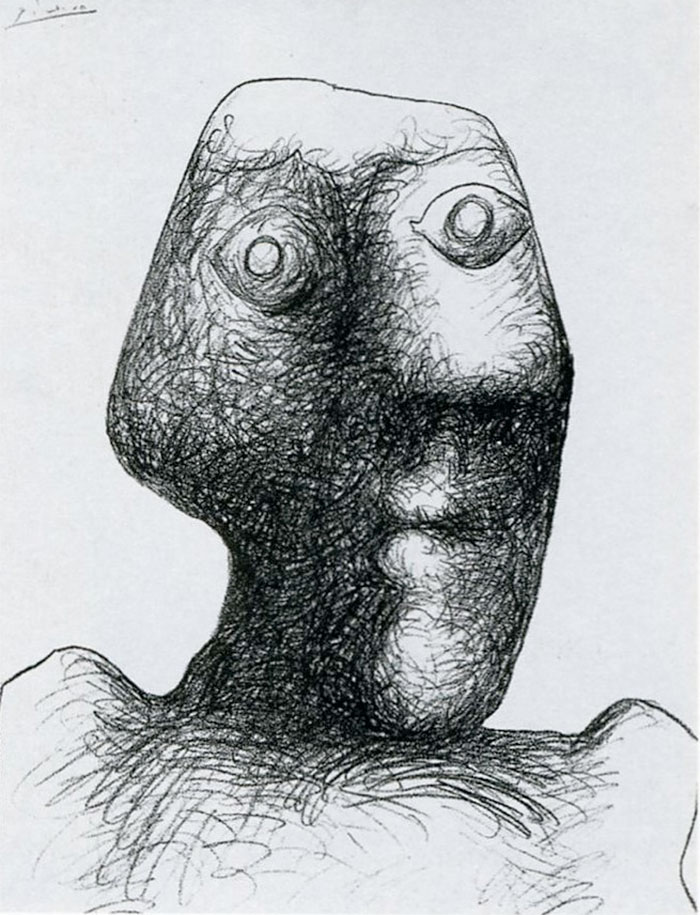
age 90

In our model poem for this month's prompt, "Self-Portrait at 36 w/ David" by Ellen Hagan, the poet moves from photograph, to photographer, to mirrors, including the one inside a camera.

Any well done self-portrait is more than just a literal reflection of the artist, and as a poem it is not just the autobiographical details of the poet's life at that moment.

Some poets have even mixed their poems with artists or others self-portraits. In "Self-Portrait as Vincent Van Gogh at the Asylum at Arles" by Roger Reeves, and Self-Portrait as the Bootblack in Daguerre’s Boulevard du Temple by Robin Coste Lewis, the poets look to art to find something of themselves.

For this month's writing prompt, "self-portrait" should appear in the title of your poem, and the poem itself should capture you with specificity and details in some particular time and place that you feel captures yourself like a painting or photograph. Think about using the techniques of other artists and writers who work in portraiture, confessional and memoir.

SUBMISSION DEADLINE: Tuesday, September 5, 2017
Please follow our submission guides at poetsonline.org/submit.html 


August 30, 2015

Elizabeth Alexander's Memoir Connects to Readers


via NPR
You may know the acclaimed poet Elizabeth Alexander from her reading at President Obama's 2009 swearing-in ceremony.

Alexander, who teaches at Yale, published a new book earlier this year — but it's not poetry. The Light of the World is a memoir of the 16 years she shared with her husband Ficre, until his sudden death a few years ago.

He died of cardiac arrest while running on a treadmill at home, just before his 50th birthday, leaving behind Alexander and their two sons. Since the book came out, Alexander says, she finds herself in the role of collector; people present her with objects as a way of responding to her loss — pictures, letters, stories and more.

She tells NPR's Michele Norris that nothing had prepared her for this. "I never imagined — in fact, I was quite certain I would never write a memoir. My own sense of privacy was too powerful," she says. "When I sat down to write, I didn't sit down to write this. I simply wrote as an extension of my hand, as an extension of my body, trying to stay absolutely grounded with my hand on a table, with my feet on the ground, planted on an Earth that had so suddenly seemed unstable."


February 12, 2008

6 Word Memoirs

I stumbled upon a book while I was looking for some "flash fiction" - those short, short stories. It's called Not Quite What I Was Planning: Six-Word Memoirs by Writers Famous and Obscure by Larry Smith.

There are a thousand of these little literary glimpses of humanity. The "assignment" is to capture one life in 6 words.

Some of you have probably seen the Ernest Hemingway example that may have inspired the book:
"For Sale: baby shoes, never worn."
There certainly is at least one story in that half dozen words.

Enter Larry Smith. He founded SMITH Magazine on January 6, 2006, which is National Smith Day. He was the articles editor and still contributes to Men's Journal, and had been the executive editor of Yahoo! Internet Life, senior editor at ESPN magazine, a founding editor of P.O.V. and Might magazines.

When his online storytelling magazine SMITH asked readers to submit six-word memoirs, he received funny and serious entries.

There's the bittersweet romance of "Found true love, married someone else" and just bitter regret of "After Harvard, had baby with crackhead."

Then he went to the famous of the title (Jonathan Lethem, Richard Ford, Stephen Colbert, Amy Sedaris, Sebastien Junger...)


It's not exactly a poetry writing prompt, but how about giving the assignment a try and posting your own six word memoir here as a comment?

October 12, 2006

Andrew Motion Encounters Anne Frank

The poem by Andrew Motion that we used as a model this month ("Anne Frank Huis") was written immediately after his visit to the Anne Frank house (huis) in Amsterdam.

I am convinced that houses are haunted by those who lived in them. I don't really mean ghosts or poltergeists, but I suppose I do mean something supernatural in the dictionary sense of "relating to an order of existence beyond the visible observable universe."

The homes of our childhood, those of relatives, probably even the one we live in now, have things not observable that dwell there. Historic homes, museums, train stations and many other public buildings have residual memories.

On June 12, 2006, Anne would have been 77. Not so old - about my mother's age. This seems strange to me because Anne is still a character from high school history and English classes to me, and she seems somehow much further away in time than 77 years.

I recall seeing the Hollywood film version of her story which came out in 1959. I wouldn't have seen it in a theater then - probably I saw it on TV and then in high school in a classroom. My memories of the film are stronger than the book now. I remember that the actress who played Anne (Millie Perkins) reminded me of Audrey Hepburn (who I had a crush on). Perkins was born in Passaic, NJ and is still acting today. I liked the film. I liked the book. I liked Anne.

And I remember the house from the film (it was filmed in Amsterdam & on Hollywood sets).
If you never saw the film, you can watch a clip online at the official Anne Frank web site.


I was Google surfing Anne Frank's house when I was working on this prompt and came across "other sites" to visit near the house. I wonder what your writing would produce if you did this walking tour of the area:

RIJKSMUSEUM AMSTERDAM - is the largest museum of art and history in the Netherlands. VAN GOGH MUSEUM - largest Van Gogh collection in the world
HASH AND MARIJUANA MUSEUM and the Seksmuseum, which holds a collection of pornographic materials, both found in the nearby
RED LIGHT DISTRICT - since Amsterdam is well-known for its legalized prostitution and live sex shows. Tourists can take a walk through this unique section of the city where prostitutes are posed in window displays or take in a live sex show. Please note that taking pictures of the live window displays is not permitted.

This month's prompt asks you to write about a house or building that affected you in the way that Anne's hiding place did for Andrew Motion. Your poem should certainly include details of the place itself, and you should avoid "haunted house tales" which is not at all the point of this writing prompt. Perhaps, this is poem as memoir though the memory may not be your own.

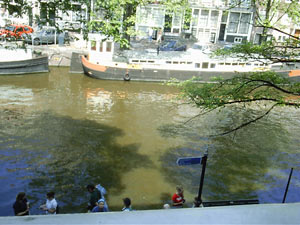
view of canal


A view of the canal from the Anne Frank house.