I like this edition's cover image showing hands trimming the tip of a quill pen, ready to set down a new sonnet.
Shakespeare's sonnets were first published in 1609. They were probably published without Shakespeare's permission in a time when copyright didn't exist as we know it.
The book contained 154 sonnets and all but two of them had never been published before. So, this was new material for readers. Shakespeare (or perhaps the publisher Thomas Thorpe) dedicated the collection to "Mr. W.H." whose identity has never been known with any certainty.
The poems are about love, sex, politics, youth, and the mysterious "Dark Lady." Scholars have written about them for hundreds of years. They have been material for lovers and teachers, and for hopeless and hopeful romantics.
Untitled but for numbers, many of them are known for their first line or one phrase in the poem.
For example, "My mistress' eyes are nothing like the sun," and W"hen, in disgrace with fortune and men's eyes, I all alone beweep my outcast state."
Shall I compare thee to a Summer's day? Thou art more lovely and more temperate: Rough winds do shake the darling buds of May, And Summer's lease hath all too short a date: Sometime too hot the eye of heaven shines, a And often is his gold complexion dimm'd; And every fair from fair sometimes declines, By chance, or nature's changing course untrimm'd: But thy eternal Summer shall not fade, Nor loose possession of that fair thou ow'st; Nor shall Death brag thou wand'rest in his shade, When in eternal lines to time though grow'st: So long as men can breathe or eyes can see, So long lives this and this gives life to thee.
Follow this blog for all things poetry. To see our past prompts and more than 300 issues, visit our website at poetsonline.org
Ophelia by John Everett Millais - Google Art Project
The plays of William Shakespeare continue to be relevant because his characters' motivations, problems, and emotions are universal.
When I retired, I felt like Prospero at the end of The Tempest. In one job I had as an administrator, there were some days when I was in a scene from Julius Caesar. In college, I had a number of young Hamlet moments. In high school, I identified with Juliet and Romeo depending on the relationship.
I read a poem - Ophelia's Technicolor G-String: An Urban Mythology - about a reimagined modern-day Ophelia. In that poem, the sad, naive, and mistreated girlfriend of Hamlet is launched into modern times. She became quite different in our time and seems much happier.
Oh Hamlet, if you could see me now as I pump and swagger across that stage, cape dripping to the floor, me in three-inch heels and a technicolor G-string— you would not wish me in a convent. They’ve made me a queen here, married me off to a quarter bag and a pint of gin.
It could be our model poem, but I started reading more about Ophelia and looking for other poems about her. My search turned up a few allusions to Polonius' daughter but no other model poem candidates.
So, for this prompt, I chose only to use Shakespeare's own words. It is the abridged love letter that Hamlet wrote to Ophelia that is intercepted by her father. Polonius reads it - well, some of it - to his wife Gertrude in Act II scene ii.
“To the celestial and my soul’s idol, the most beautified Ophelia”
“In her excellent white bosom, these... (here Polonius interrupts his reading and "spares" Gertrude the sexy stuff)
Doubt thou the stars are fire, Doubt that the sun doth move, Doubt truth to be a liar, But never doubt I love. Thine evermore, most dear lady, whilst this machine is to him. Hamlet.
Before I get to our prompt this month, some more about Ophelia.
She is a naïve girl who wants to please both her father and her boyfriend. Shakespeare couldn't write about there being pre-marital sex between his two young aristocratic characters, but there are reasons to believe that they had sex though her father had warned her not to do such a thing. For instance, Hamlet says "Shall I lie in your lap, my lady?"and "Do you think I meant country matters?” (The latter generally interpreted to mean "Did you think I was talking about sex?. It is also a pun on a C-word expletive) A more definitive piece of evidence comes when Ophelia "goes mad" after her father's murder. One of the mad songs she sings includes the line "Before you tumbled me / You promised me to wed’” (IV.v.).
Ophelia is usually seen as a symbol of femininity and Hamlet unfairly takes out some of his aggression toward his mother on her. There is plenty of evidence that Hamlet is the cause of her madness. Modern-day feminists view Ophelia as trapped in a patriarchal society that requires subjugation to her father and her brother -at least until she is married,
Another interpretation bringing her into more modern times is that Ophelia's madness is really that she suffered from Post Traumatic Stress Disorder (PTSD) and deserves empathy rather than our pity.
In "Speaking of the future, Hamlet," Mary Jo Bang imagines the character's future, though not so far in the future to be in our time.
...My mother, the Queen, will want only my father, the King. All will be want & get. And I will be me. And O, O, Ophelia—will be the essence of love. The love of a sister. Or, the love of the brother. Compassion. Forgiveness...
In "Wild Bees," James K. Baxter briefly imagines our own Ophelia not drowned but "...on a tarred bridge plank standing / Or downstream between willows, a safe Ophelia drifting / In a rented boat."
In Meghan O'Rourke's "Ophelia to the Court," we wonder why she is in court and saying "First he thought he had a wife, then / (of course) he thought he had a whore."
For our November call for submissions, we are looking for poems where a character(s) from Shakespeare is brought into our time or the voice of the poem identifies with some aspect from the character's life. Make it clear which character (play?) you are alluding to, and if you use lines from the play indicate that with quotation marks or italics.
Need to brush up on your Shakespeare? Wikipedi has a list of characters from the plays to get you started.
Two things I learned about the playwright Christopher Marlowe in school that I remember was that he might have written some (or all?) of Shakespeare's plays and that he was killed in a tavern brawl.
He died on May 30, 1593. There was a fight in a London tavern and Marlowe was stabbed in the eye after a dispute over the bill. That I will never forget. He was 29 years old. He is best known for the plays Hero and Leander, Tamburlaine the Great, Edward the Second and especially The Tragical History of Doctor Faustus.
There are plenty of mysteries about authors of that time, especially Mr. Shakespeare. The records just don't exist. tab, no less. I don't think it is really a mystery about the authorship of Will's plays, though much has been written and conjectured about their authorship. I am of the belief that he wrote them but that he may have collaborated with other writers on some, but his name on them guaranteed an audience. If Will was alive in this or the last century, I'm sure he would have gotten into writing for movies and TV and attached his name to projects or adaptations.
It turns out that there is some mystery about the circumstances of Marlowe's death. One theory is that he was assassinated under orders from Queen Elizabeth I because he was a very public atheist. Marlowe was out on bail when he was killed and if he had gone through an inquisition there was a good chance he would have been executed. You may have learned that Shakespeare was careful about writing or saying if he was a Protestant or Catholic in order to not offend, to get his plays approved by the court, and to protect his life. The Queen gave orders to silence Marlowe and "prosecute it to the full,” and she pardoned Marlowe's murderer, Ingram Frizer, a month later.
Young, handsome Christopher "Kit" Marlowe had his enemies. Friend of Elizabeth, Sir Walter Raleigh, was supposedly worried about being implicated if there was an inquisition of Marlowe, so he would have liked to have him out of way before that time.
Marlowe’s former roommate was Thomas Kyd. Kyd was also a playwright, the author of The Spanish Tragedy, and an important name in Elizabethan drama. Like Marlowe, Kyd's plays were overshadowed by Shakespeare's works. Kyd is sometimes credited with a play titled Hamlet that was written and performed before Shakespeare's version. About a month before Marlowe's death, Kyd had been arrested and tortured for his connection with Marlowe. Kyd died a year later at the age of 35 unknown and in debt.
But if I ever write my Marlowe murder mystery for the page or screen, I might use that theory, but the more interesting plot is that Marlowe actually faked his own death.
There are some who believe(d) that Kit faked his death and fled the country to avoid his impending inquisition. Once he was safe outside London or out of England, Marlowe would have continued writing and sending his works back to England to be performed. They would need to be attributed to someone else.
Two weeks after Marlowe’s inquest, the first piece of writing to appear under the name William Shakespeare was published. Shakespeare was very likely influenced by Marlowe's plays as he was the popular writer of the time and Will's early plays seem more like Marlowe's writing. Was Will the name on the script while he was learning to write on his own?
I once pitched my story idea to a Shakespeare professor and he said there was a book out there that also followed that idea. I did some digging and found The Marlowe Papers by Ros Barber. She points out that Shakespeare was rather fascinated with characters who were thought to be dead.
There are 33 characters who appear in 18 of his plays that are mistakenly believed to be dead for some part of the story, including some deliberately staged deaths and three faked deaths done to avoid real death.
I guess I'll have to collaborate with Ros... or I might just work on my other literary murder mystery about the death of Edgar Allen Poe. We are still not certain what happened to him on those final days - and Poe had such an interesting life before that.
Recently, it was discovered that a copy of Shakespeare’s First Folio, housed in the Free Library of Philadelphia, once belonged to John Milton, author of Paradise Lost.
There are other First Folios in the world but this one contains what experts now widely believe to be Milton’s notes on Shakespeare, in his own handwriting. Suddenly, we can read what one of the greatest English language poets was thinking as he engaged with Shakespeare’s plays.
The connection was made by Cambridge University’s Jason Scott-Warren who was reading an essay by Penn State’s Claire M.L. Bourne about this copy of the First Folio when the handwriting in the notes started to look familiar. They connected (via Twitter).
Reading Milton's notes and changes to the text we can ask was he editing Shakespeare to make the poetry "better" or was he fixing what he saw as inconsistencies among the different versions that were in print?
You can listen to Bourne and Scott-Warren discuss what this discovery means, how technology (including Twitter) has changed their work, and what comes next on a podcast from the Shakespeare Unlimited series from the Folger Shakespeare Library
That time of year thou mayst in me behold
When yellow leaves, or none, or few, do hang
Upon those boughs which shake against the cold,
Bare ruined choirs, where late the sweet birds sang… ~ William Shakespeare, Sonnet 73
The words "autumn" and "fall" meaning the season that begins today in the Northern Hemisphere both originated in Britain, but one is more commonly used there while the other is more common in America. By the mid-1800s, "fall" was considered to be the American season by lexicographers.
Autumn is the older word, coming into English in the 1300s from the Latin word autumnus.
At one time there was an intermediary season preceding our autumn that was called "harvest." It seems that autumn came into usage to distinguish between the time when one harvests crops and the actual crop harvest itself.
"To Autumn" by John KeatsSeason of mists and mellow fruitfulness,
Close bosom-friend of the maturing sun;
Conspiring with him how to load and bless
With fruit the vines that round the thatch-eves run;
To bend with apples the moss’d cottage-trees,
And fill all fruit with ripeness to the core;
To swell the gourd, and plump the hazel shells
With a sweet kernel; to set budding more,
And still more, later flowers for the bees,
Until they think warm days will never cease,
For summer has o’er-brimm’d their clammy cells...
Writers, especially poets, wrote about the dazzling seasonal colors of this time and the phrase "the fall of the leaves" came into more common usage. That phrase was shortened sometime in the 1600s to "fall." This coincides with English moving across the ocean with explorers and settlers to the New World. But both words must have been used in the New World as they were in Britain because "fall" for the season doesn't appear until 1755 when Samuel Johnson added it to his Dictionary of the English Language.
"The Falling of the Leaves" by W.B. Yeats Autumn is over the long leaves that love us,
And over the mice in the barley sheaves;
Yellow the leaves of the rowan above us,
And yellow the wet wild-strawberry leaves.
The hour of the waning of love has beset us,
And weary and worn are our sad souls now;
Let us part, ere the season of passion forget us,
With a kiss and a tear on thy drooping brow.
Fall is still occasionally used in countries where British English is spoken, but more likely in phrases, like "spring and fall." American though I may be, I prefer autumn, since it is used by astronomers to mark the Autumnal Equinox.
This spring, I am the "poet in residence" at a middle school. It is fun to be back in a classroom, especially since I am only there once a week and only for an hour. The students have sessions where we write, revise, and listen to each other's poems.
There are three "events" where they can read their best poem aloud. One is performance-oriented, but the other two are just readings and it is quite a thing to be that age and be able to stand in front of a crowd and read aloud. Some will memorize. Some will add some performance, but I'm impressed with any of them reading something they wrote aloud at that age.
My own first reading at an open mic in a bookstore happened in high school and before I read my knees were very literally shaking and I had to hold onto the podium to keep my hands still.
Having heard actors and poets read some poems on recordings, my idea of "how to read a poem aloud" was rather distorted. I knew I couldn't read like Richard Burton, but I thought that kind of reading should be my model.
Of course, you don't need celebrities to have a good reading of a poem, but actor John Lithgow put together The Poets' Corner a collection of well-known poems and had them read by a group of celebrities. The readings are online.
I listened to the collection and it brought back memories of poems read or heard when I was a young student discovering poetry. It includes Wallace Stevens's poem "The Emperor of Ice Cream" (read by Kathy Bates) which was a poem that grabbed me in high school with its title and language.
There are many collections of poets and others reading online. You could spend days going from one to another on YouTube alone. I share some of these with students because hearing poetry read aloud is not a commonplace event for most people. young or old.
The students read their poems too quickly. They try to memorize rather than "learn by heart" their poems - a difference that is not easy to understand or learn. Some over-dramatize. They use their "poet voice" in the way that novice Shakespearean actors drift into British accents - even when Romeo is Italian or Twelfth Night takes place in Illyria (Yugoslavia) and Hamlet and his friends are from Denmark.
It is rare to see a poet (or any writer, though non-fiction writers and novelists get more airplay) interviewed on TV - even rarer to hear poetry read. I was happily surprised when actress Helen Mirren was asked by Stephen Colbert to read the end of Alfred Lord Tennyson’s poem “Ulysses” on his show. (read "Ulysses") It is an old poem and apparently, one Colbert has great affection for.
“Death closes all: but something ere the end
Some work of noble note, may yet be done…”
That section of Tennyson's poem - hopeful that some work might still be done - reminds me of the Epilogue to Shakespeare's The Tempest. Prospero, a wizard and an old man, gives this final speech and I have always thought of it as Shakespeare's own farewell/retirement speech. He asks that the audience "release me from my bands, with the help of your good hands." The two times I have seen the play performed, after that line the audience did, with its applause, free him. Shakespeare's "project" - "which was to please" is finished.
Now my charms are all o'erthrown,
And what strength I have’s mine own,
Which is most faint. Now, ’tis true,
I must be here confined by you,
Or sent to Naples. Let me not,
Since I have my dukedom got
And pardoned the deceiver, dwell
In this bare island by your spell,
But release me from my bands
With the help of your good hands.
Gentle breath of yours my sails
Must fill, or else my project fails,
Which was to please. Now I want
Spirits to enforce, art to enchant,
And my ending is despair,
Unless I be relieved by prayer,
Which pierces so that it assaults
Mercy itself and frees all faults.
As you from crimes would pardoned be,
Let your indulgence set me free.
I think that many of my young poets, like Prospero and Shakespeare, want "spirits to enforce, art to enchant." I hope they get that, if only for a few minutes when they read and are freed by the audience's hands.
Although Henry David Thoreau wrote little poetry, I find his essays and journal to be inspirational. He advised in his journal that we should “Take long walks in stormy weather or through deep snows in the fields and woods, if you would keep your spirits up. Deal with brute nature. Be cold and hungry and weary.”
I am a fan of winter walks and I especially like going out after a snowfall. The woods are whitewashed clean, and the snow muffles sounds. I like to follow the tracks of animals who have walked there before me that day.
Adam Gopnik's book Winter: Five Windows on the Season is a meditation on the season via artists, poets, composers, writers, explorers, scientists, and thinkers, who have created our modern idea of winter. It goes to unlikely places, such as thinking about how snow science leads to existential questions of God and our place in the world.
Do I love the winter season? No, it is my least favorite season. (Autumn is my favorite.) I often say that i want to retire to a place without winter, or at least with a much milder winter than my New Jersey ones. But I suspect i would miss winter after a time.
The Brain Pickings blog had a post about Thoreau finding inner warmth in this cold season, but here is a section from his journal that isn't about going for a walk in the snowy woods.
The wind has gently murmured through the blinds, or puffed with feathery softness against the windows, and occasionally sighed like a summer zephyr lifting the leaves along, the livelong night. The meadow-mouse has slept in his snug gallery in the sod, the owl has sat in a hollow tree in the depth of the swamp, the rabbit, the squirrel, and the fox have all been housed. The watch-dog has lain quiet on the hearth, and the cattle have stood silent in their stalls. The earth itself has slept, as it were its first, not its last sleep, save when some street-sign or wood-house door has faintly creaked upon its hinge, cheering forlorn nature at her midnight work, — the only sound awake twixt Venus and Mars, — advertising us of a remote inward warmth, a divine cheer and fellowship, where gods are met together, but where it is very bleak for men to stand. But while the earth has slumbered, all the air has been alive with feathery flakes descending, as if some northern Ceres reigned, showering her silvery grain over all the fields.
I identify with Thoreau's suggestion to walk in winter, but I also identify with curling up under a blanket inside and just observing the winter outside.
Here is Hank expanding on that winter walk:
There is nothing so sanative, so poetic, as a walk in the woods and fields even now, when I meet none abroad for pleasure. In the street and in society I am almost invariably cheap and dissipated, my life is unspeakably mean. No amount of gold or respectability would in the least redeem it, — dining with the Governor or a member of Congress!! But alone in distant woods or fields, I come to myself, I once more feel myself grandly related, and that cold and solitude are friends of mine. I suppose that this value, in my case, is equivalent to what others get by churchgoing and prayer. I thus dispose of the superfluous and see things as they are, grand and beautiful.
Poets have had much to say about winter. Mr. Shakespeare wrote:
Blow, blow, thou winter wind,
Thou art not so unkind
As man’s ingratitude;
Thy tooth is not so keen,
Because thou art not seen,
Although thy breath be rude.
I feel more akin to the "Winter Trees" of William Carlos Williams and like them in this cold month I am protecting my buds from the season and sleepily waiting for spring.
All the complicated details
of the attiring and
the disattiring are completed!
A liquid moon
moves gently among
the long branches.
Thus having prepared their buds
against a sure winter
the wise trees
stand sleeping in the cold.
Even though there are more books written about him than probably anyone, we don't know that much about William Shakespeare. This is especially true for what are known as the "lost years" from 1578-82 and then from 1585-92.
The first period covers the time after Shakespeare left grammar school, until his marriage to Anne Hathaway in November of 1582. The second period covers the seven years of Shakespeare's life in which he must have been perfecting his dramatic skills and collecting sources for the plots of his plays.
That second lost period is what the TNT series focuses on. Will is a struggling playwright who is tired of working in the family business as a glover (making gloves) in order to support his wife and three children. He leaves them to travel to London and seek his quite literal fame and fortune.
Shakespeare purists may have problems with the liberties that those lost years allow the filmmakers. It is no surprise that some aspects of the telling are updated. The most obvious inclusion is a pop-punk soundtrack to Will's adventures.
Though this story begins in 1592, two years after the execution of Mary, Queen of Scots, with Queen Elizabeth I is on the throne, there are allusions to future plays by Will alluded to. In one episode, Will learns about exploration in the new world - a brave new world - and jots a note to use for The Tempest in about 20 more years.
Pretty quickly after arriving in the funky London, he co-writes the play Edward III to a great reception and a star is born. I'm not sure it was that fast in real life, but then no one is really sure. Will the charms theater James Burbage, befriends the acting company, pushes out the previous playwright, has a rap battle with Christopher Marlowe in a pub and falls in love with Burbage's daughter, Alice.
Alice? Burbage's son Richard did become one of the most celebrated actors of his era and the elder son, Cuthbert, followed in his father's footsteps as a theatre manager. Alice?
One aspect of Shakespeare's real life that is emphasized in the episodes I've seen so far is religion. Will keeps his Catholicism secret from those who would threaten to kill him and exploit his connection to the wanted Robert Southwell.
Though Will is out-of-place - a Catholic from the small town of Stratford in a turbulent big city during a time of religious turmoil - he seems to adapt quite easily.
The first real reference to Shakespeare as an actor/playwright was in 1592. He was attacked in a pamphlet, written by a well-known poet and playwright, Robert Greene. Greene was one of the university wits. They were the Cambridge/Oxford trained literary scholars of the era and that included Christopher Marlowe and Sir Walter Raleigh. Both of those wits appear in the series. The pamphlet was called the 'Groatsworth of Wit' in which Greene attacks the actor William Shakespeare as an "upstart crow."
I like Shakespeare. The real one. And his plays. I also like that the plays remain relevant because people keep bringing them into the present. Some people have a problem with that. I don't. Some people protested this summer at a New York production of Julius Caesar during the assassination scene and shouting: “This is violence against Donald Trump.” Yes, Caesar looked like Trump.
The play was part of the annual free Shakespeare in the Park series. I have attended many of those performances over the years. I've seen Kevin Kline and Meryl Streep. I've seen old style and new style Shakespeare there. I love it.
Company spokesperson Oskar Eustis addressed the audience one night before the performance and said “Anyone who watches this play tonight… would know that neither Shakespeare nor the Public Theater could possibly advocate violence as a solution to political problems, and certainly not assassination. This play, on the contrary, warns about what happens when you try to preserve democracy by non-democratic means, and again, spoiler alert: it doesn’t end up too good.”
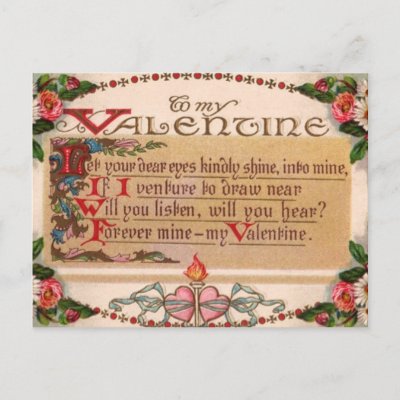
Chaucer gets credit for establishing St. Valentine's Day as a romantic occasion, when in the 14th-century he wrote in "The Parlement of Foules" of a spring landscape "on seynt Valentynes day" where the goddess Nature watched as every kind of bird came before her to choose and seduce their mates.
In the early 15th century, the Duke of Orleans wrote a Valentine's poem to his faraway wife while held captive in the Tower of London.
Shakespeare mentioned the sending of Valentines in Ophelia's lament in Hamlet. And hundreds of years later, with the advent of cheaper postal services and mass-produced cards, the tradition of sending lacy love notes on the holiday was enormously popular with the Victorians. In 2010, more than 1 billion cards were sent worldwide.
"Parlement of Foules" (1382) by Geoffrey Chaucer - “For this was on seynt Volantynys day / Whan euery bryd comyth there to chese his make” ["For this was Saint Valentine's Day, when every bird cometh there to choose his mate"] (Wikipedia: Valentine’s Day)
As I wrote on an earlier Valentine's Day, I like the book of valentines by Ted Kooser. In 1986, Kooser (U.S. Poet Laureate 2004–2006) sent a Valentine's Day poem on a postcard to 50 women. Over the next three decades, he sent an annual poem to an increasing number of women (in 2007 there were 2,600 recipients). Valentines collects those poems - and they are not all typical "love poems" or things you would find in a Valentine card.
This is just one of the leathery eggs
the scuffed-up, dirty turtle of the moon
buried early in spring, her eyes like stars
fixed on the future, and, inside its red skin,
whiteness, like all of the moons to come,
and marvelous, buttered with light.
All the world's a stage! The Play's the thing. Fair is foul and foul is fair. Hardly a day goes by when the words that flowed from William Shakespeare's pen don't meet and greet us in the modern world.


 I once pitched my story idea to a Shakespeare professor and he said there was a book out there that also followed that idea. I did some digging and found




 by Jess Winfield,
  by Stephen Greenblatt, Shakespeare in
  some things about the film
  and Shakespeare's last will, about the continuing controversey about the authorship of the plays


