Showing posts with label mini-prompt. Show all posts

June 18, 2021

Mini-Prompt: American Sentences

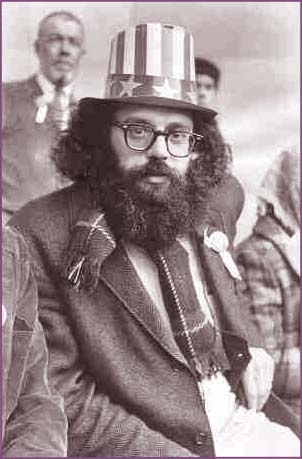
allen ginsberg
Ginsberg  via Flickr

If you're looking for some more inspiration this month, I always suggest taking a look at Paull Szlosek's Poetry Playground blog. There are many forms and examples, both traditional and invented forms.

One of those is the American Sentence, a poetry form that was invented by Allen Ginsberg and popularized by Paul E. Nelson as a variation on traditional haiku. 

American Sentences also consist of 17 syllables, but the 3-line format and 5-7-5 breaks are dropped. The 17 syllables are written as a single line or sentence. They may have a title. 

Is it one complete grammatical sentence? Sometimes, but feel free to do several short sentences or even phrases., while others have written them as two, three, or four or even just as series of phrases. 

There are some other slightly haiku-ish conderations. Nelson feels they should focus on concrete images. Ginsberg said you should mention either a time or place (or both) and the use of articles such as “a” and “the” should be avoided. But neither adhered to their own suggestions all the time.

I have also seen poets write multi-line poems composed entirely of American Sentences which gives the poem a kind of Japanese-American "meter."

Here are four of the original American Sentences by Ginsberg:

Nov 1991 N.Y.
Put my tie on in a taxi, short of breath, rushing to meditate
 
Tompkins Square Lower East Side N.Y.
Four skinheads stand in the streetlight rain chatting under an umbrella

On Hearing the Muezzin Cry Allah Akbar While Visiting the Pythian Oracle at Didyma Toward the End of the Second Millennium
At sunset Apollo’s columns echo with the bawl of the One God

 
Approaching Seoul by Bus in Heavy Rain
Get used to your body, forget you were born, suddenly you got to get out!


Visit our website at poetsonline.org

November 25, 2020

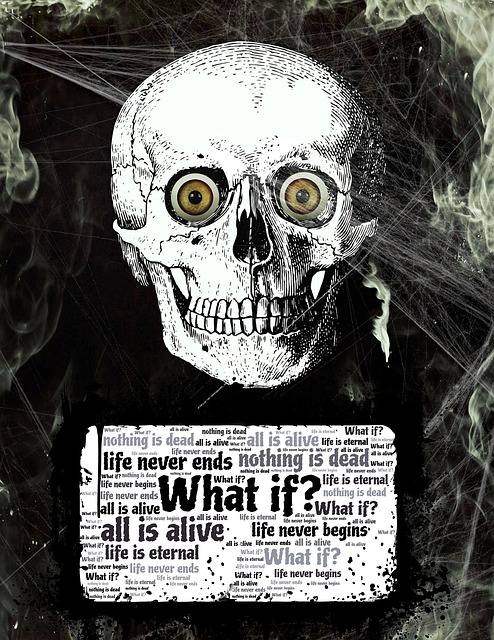
Mini-Prompt: What If

Image by John Hain from Pixabay


I saw a video interview with Ray Bradbury a long time ago in which he said almost everything he has written has been inspired by asking "what if."  Bradbury wrote novels and stories but a lot of his writing advice applies to poetry too.

The short story, if you really are intense and you have an exciting idea, writes itself in a few hours. I try to encourage my student friends and my writer friends to write a short story in one day so it has a skin around it, its own intensity, its own life, its own reason for being. There’s a reason why the idea occurred to you at that hour anyway, so go with that and investigate it, get it down. Two or three thousand words in a few hours is not that hard. Don’t let people interfere with you. Boot ’em out, turn off the phone, hide away, get it done. If you carry a short story over to the next day you may overnight intellectualize something about it and try to make it too fancy, try to please someone. (from a 2010 interview with Sam Weller, published in The Paris Review)

Bradbury told about an encounter he had as a boy in 1932 with a carnival magician, Mr. Electrico. Wreathed in static electricity, Mr. Electrico touched the young Bradbury on the nose and said, “Live forever!” Ray returned to the carnival the next day for advice about magic. Mr. Electrico introduced him to the other performers in the carnival and told Bradbury that he was a reincarnation of his best friend who died in World War I. 

What if he could live forever or he was reincarnated or if there could be a truly magical carnival? Bradbury later wrote, “a few days later I began to write, full-time. I have written every single day of my life since that day.” That carnival came back to him along with all the "what ifs" of his boyhood and became his novel Something Wicked This Way Comes. What if a magician at a carnival could grant your greatest wish? "By the pricking of my thumbs, something wicked this way comes," says one of the witches in Shakespeare's Macbeth.

I used to ask my teenaged students to write a what-if poem after we had read a few Bradbury stories. One of the model poems I use that they always seemed to like was an old one - "What if you slept" by Samuel Taylor Coleridge. I never told them before the poem or the writing how old Coleridge or the poem was because not only is that irrelevant to the lesson but because the poem doesn't seem old at all - especially coming from the opium addict that wrote "The Rime of the Ancient Mariner."

What if you slept
And what if
In your sleep
You dreamed
And what if
In your dream
You went to heaven
And there plucked a strange and beautiful flower
And what if
When you awoke
You had that flower in your hand
Ah, what then?


Coleridge by John Chubb - from the collection of the Blake Museum

Coleridge's life is interesting - and sad. Born in Ottery St. Mary in Devonshire, England in 1772, he wrote that he was falling into a deep depression when he was introduced to the poet William Wordsworth in 1795. That first year of their friendship was the most productive period of Coleridge’s life. 

They both liked to compose their poetry while walking, so they took long walks together throughout that summer, though Wordsworth preferred to stay on the path while Coleridge liked rough terrain. 

That winter, they spent several days hiking along the coast, and to pass the time they made up a gothic ballad about a tragic sea voyage. Coleridge became obsessed with the poem when he got home, filling it with images from nightmares he’d had since he was a kid, and it became “The Rime of the Ancient Mariner” (1798).

It's a difficult poem to read today though the story of a sailor who brings a curse on his ship when he kills an albatross is full of sea monsters and the ghosts of his dead shipmates.

The poem brought him some fame and money but within a few years of writing it he became addicted to opium, which killed his creativity and ruined his friendship with Wordsworth. He failed to complete most of his ambitious projects, including a 1,400-page work of geography, a two-volume history of English prose, a translation of Faust, a musical about Adam and Eve, a history of logic, a history of German metaphysics, a study of witchcraft, and an encyclopedia.

His friend Charles Lamb wrote of Coleridge, “His face when he repeats his verses hath its ancient glory, an Archangel a little damaged.” What if he had not become addicted to opium?

If you try writing a what-if poem and would like to share it, post it as a comment to this post. (All comments must be approved before they appear.)

Visit our website at poetsonline.org

April 23, 2020

Mini-Prompt: Stafford's Aphorisms


I have been reading and rereading William Stafford's poetry and prose since I was in college. It was his daily writing practice which inspired my own poem-a-day project in 2014.  It was good discipline and I produced 365 short poems and have continued that project on a weekly basis since then. 

One of his aphorisms explains his ability to write first thing every morning and produce something he considered a poem: "A realization: my slogan for writing—lower your standards and go on—applies to living, to getting old."  

Though I created my own short form for my daily writing so that I wouldn't be intimidated with the task and a form so that I had parameters, Stafford said, "I write short things because no one will listen long."

cover       


For this mini-prompt, I used Stafford's collection, Passages from Sound of the Ax: Aphorisms and Poems. I chose a handful of them to use. Your prompt is to select one and use it as a line, epigraph or title for your short poem. If you have his book or find others online, use them. Put quotation marks on the Stafford line if you post it here as a comment. 

Stafford often started the day and a poem with one of his aphorisms as one of his elements of his daily practice.

An "aphorism" — a freestanding sentence, an idea, a question, a puzzle. Often, William Stafford would next write a sentence that "lifted off" from daily experience to observe a pattern, a truth, an idea, or a private joke ("It still takes all kinds to make a world, but there is an oversupply of some"). This provisional understanding from daily life begins to raise your attention out of the mundane into the gently miraculous realm of poetry. It is your own koan. These aphorisms in William Stafford's daily writing rarely become part of poems (though some of his poems are built from a series of such lines). Most often, they are little wonders left to resonate as private treasure, threshold, key. A bell has been struck, bringing the writer to attention. 

If you write a poem and would like to share it with our online community, post it as a comment below this post. Take note that when you post any comment to the blog (and many other blogs), it needs to be approved before it appears. I've noticed that several people have submitted a comment multiple times thinking it didn't go through. Keep calm and don't resubmit.

If you're not familiar with William Stafford's poetry, I would suggest the collection Ask Me: 100 Essential Poems of William Stafford as a starting place.  Here are some aphorisms to consider - even if you're not writing a poem.

Every mink has a mink coat.

Believing our way, we find.

The arrow tells what the archer meant to say.

What can’t be avoided must be endured.

Art is first nothing, then something.

Faith is easy; doubt is hard.

My life isn’t what I thought it was. But the world isn’t either.

Many things we think we are leaving are waiting for us.

I’ve got in a lot of trouble in my life by being careful.

The river keeps looking for the perfect stone.

Strange, the best part of a room is a window.

If there is a trail, you have taken a wrong turn.

I hear the clock’s little teeth gnawing at time.

At first, it’s not much of a river.


Visit our website at poetsonline.org